


Kajabi is an all-in-one digital business platform that supports digital products like courses, podcasts, coaching, and communities. It also features all the business tools you need to run an online business, including email marketing, analytics, funnels, and a plethora of third-party integrations. Its downside is that it comes at a higher cost than most LMS platforms, so it’s not the best choice if you’re looking for an afordable course building solution.
On the other hand, Thinkific is a course-building platform that offers better student experience features and is more affordable than Kajabi. Course creation is its primary focus but it also comes with basic community features, which aren’t as advanced as Kajabi’s. Thinkific is a great choice if you’re only trying to build an online course and don’t need all the extra online business tools.
So, should you go for Kajabi’s all-inclusive package or Thinkific’s affordable courses? Let’s take a closer look at Kajabi vs Thinkific and find out. We’ll compare them feature by feature:
- Pricing
- Payments
- Course creation
- Additional products
- Sales and marketing tools
Let’s get into it!
Comparison Summary: Kajabi vs Thinkific
Kajabi works best for knowledge entrepreneurs aiming to grow their outreach with professional marketing tools. If you need to spare yourself the hassle of running a dozen third-party tools, Kajabi’s built-in alternatives and templates will simplify your tasks, although it’ll cost you more. On the other hand, Thinkific will be a better option if you’re an educator, aiming to build your course at the utmost learning quality and stellar student experience. You’ll need an intuitive interface and advanced course creation tools and Thinkific can give you that.
| Thinkific | Kajabi |
|---|---|
 |  |
| Price | |
|
⭐⭐⭐⭐ 30-day free trial on every plan. Basic plan costs $54/mo, Start plan is $109/mo, Grow plan is $219/mo. Plus is custom-quoted. |
⭐⭐⭐⭐ 30-day free trial. Kajabi has retired its entry tier: Basic is $179/mo, Growth $249/mo, Pro $499/mo. |
| Payments | |
|
Stripe/PayPal. Built-in payment processor with zero platform fees. Upsells/order bumps. |
🏆 Members pay with Stripe/PayPal. Split payments. Upsells/downsells/order bumps. |
| Course Creation | |
|
🏆 More intuitive interface. More file types and larger attachment sizes. |
Course templates. Graded assessments/certificates/variety of question types. |
| Student Engagement | |
|
🏆 More organized and interactive community. More file and post types. |
Communities are a simple alternative to Facebook groups. |
| Built-in Marketing Tools | |
|
Advanced reporting on Grow and above. Built-in email automation, but no broadcast campaigns. Relies on integrations. |
🏆 Pre-built funnels, landing pages, and sales pages. Better website builder. Built-in analytics and email. |
| Integrations | |
|
🏆 More than 90 integrations for all plans, including course building and marketing tools. |
Zapier, Facebook Pixel, Calendly, ConvertKit, Cloudflare, Segment, Typeform, Drip, and more. |
| Review Platform Ratings | |
| G2: 4.5 (404) Capterra: 4.5 (171) | G2: 4.4 (72) Capterra: 4.4 (166) |
| Best for | |
| Online course creation with an intuitive builder and integration with a variety of third-party tools. | Managing every aspect of an online business; products, websites, email lists, and marketing. |
| Try free for 30 days | Try free for |
What is Kajabi?
“The solo educator’s business hub” 👨🏫👑
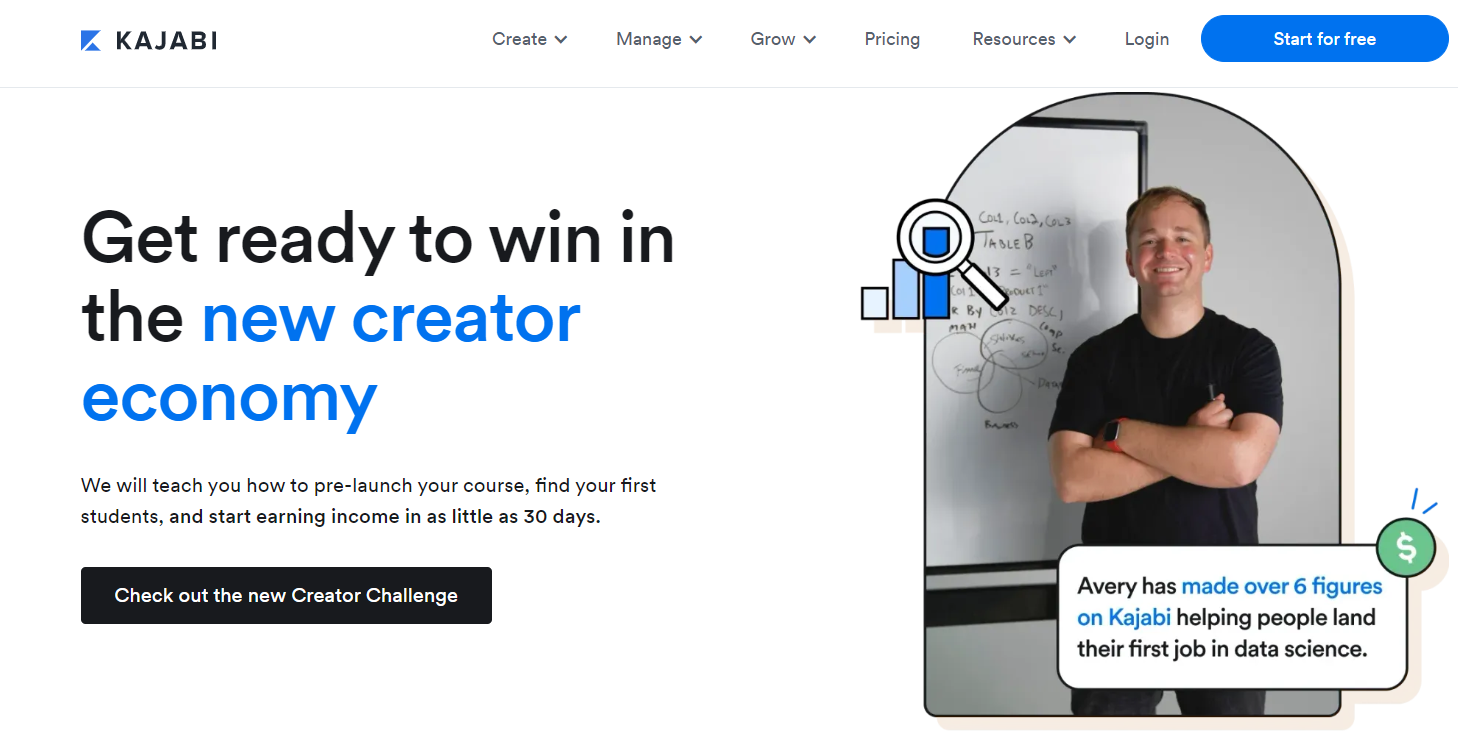
In 2010, Kenny Rueter founded Kajabi after struggling with monetization on YouTube.
Today Kajabi empowers “knowledge entrepreneurs” to seamlessly set up and grow their digital product businesses with an all-in-one platform. Kajabi understands that uploading course material is only one side of the teaching business. So, it eliminates the hassle of managing third-party tools and specialized team members. Kajabi’s array of built-in tools includes email marketing, communities, funnels, websites, and integrations.
As an all-in-one solution, Kajabi is best for online businesses that want to manage everything on one platform. It offers every common digital product and the business tools to run your whole operations.
What is Thinkific?
“Intuitive course building” 🤹♂️📚
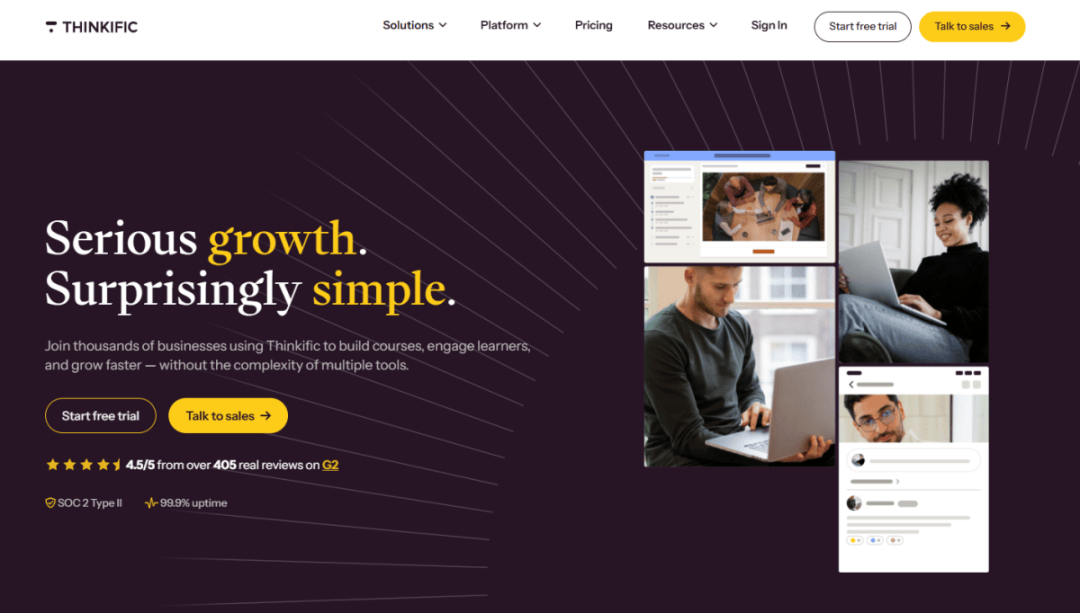
Aiming to reach more students, Greg Smith founded Thinkific for his LSAT online course.
Thinkific chose to specialize in course creation and proved its success in that area since the beginning. At the same time, it aims to maximize every educator’s potential by integrating with over 90 tools to help manage, sell, and scale their learning environment. While connecting several tools can complicate the process, Thinkific stands out with its intuitive interface, truly living up to its motto of simplifying expertise monetization.
Thinkific best suits course creators who aren’t experienced with course-building tech, or just want a simple solution. Advanced users, on the other hand, will appreciate the affordability and integration options that will let them compete with all-in-one solutions.
Kajabi vs Thinkific: Pricing
Kajabi has more tools and product types for a higher price tag. Thinkific offers unlimited courses on all of its plans.
| Plans | Starter Plan | Basic Plan | Growth Plan | Pro Plan |
|---|---|---|---|---|
| Pricing | ||||
| Kajabi | — entry tier retired | $179/month Basic, $143 annually | $249/month
Growth, $199 annually | $499/month
Pro, $399 annually |
| Thinkific | $54/month Basic, $40 annually | $109/month Start, $82 annually | $219/month Grow, $164 annually | Custom Plus, talk to sales |
| Admins and Customers | ||||
| Kajabi | 1 admin
50 customers | 1 admin
1,000 customers | 10 admins
10,000 customers | 25 admins
20,000 customers |
| Thinkific | 10,000 customers
100 GB/mo bandwidth | Unlimited customers
200 GB/mo bandwidth | Unlimited customers
400 GB/mo bandwidth | Unlimited customers
From 7,500 GB/mo |
| Products | ||||
| Kajabi | 1 website
1 product 1 funnel | 1 website
3 products 15 funnels | 1 website
15 products 15 funnels | 3 websites
100 products 100 funnels |
| Thinkific | Unlimited courses
1 community 5 spaces | Unlimited courses
1 community 10 spaces | Unlimited courses
3 communities 20 spaces | Unlimited courses
Multi-tenant environments Learning paths |
| Customer Support | ||||
| Kajabi | Live Chat (business hours) | Live Chat (business hours) | 24/7 Live Chat | 24/7 Live Chat |
| Thinkific | Email and live chat | Email and live chat | Phone and priority chat | Dedicated Success Manager |
Both offer a free trial for their middle tiers. Thinkific’s runs for a full 30 days.
Both Kajabi and Thinkific require credit cards for the free trials of paid plans. Kajabi now runs a 30-day free trial, and you can get a 30-day free trial for the Basic plan if you join through our affiliate program.
Thinkific also offers a 30-day free trial — on every plan, not just one tier — which lets you build courses, host a community, and test the AI tools for a full month before paying. You can upgrade, downgrade, or cancel at any point during the trial.
Note: For a more detailed pricing breakdown check out our Thinkific Pricing and Kajabi Pricing analysis.
One thing to note: Thinkific has retired the lifetime free plan it used to offer, so the 30-day trial is now the only way to explore the platform without paying. The old Expand tier is gone too — the lineup is Basic, Start, Grow, and the custom-quoted Plus.
Kajabi offers all its key features for all plans. Thinkific limits some features for lower tiers.
Kajabi gives equal access to Kajabi University and live chat support for all plans. But, the higher tiers are best-suitable for knowledge entrepreneurs with a wider variety of topics. For instance, the top plan allows you to have three separate websites.
Thinkific offers better support and some premium courses for top pricing plans only.
Winner: Kajabi pricing turns out to be a better deal if you can exclusively rely on its built-in tools. On the other hand, Thinkific pricing will work out the best for you if you want an unlimited course catalogue and no platform cut taken from your sales.
Kajabi vs Thinkific: Payments
Kajabi has better after-purchase options. Thinkific has a built-in payment processor for some countries.
| Kajabi | Thinkific |
|---|---|
| ⭐⭐⭐⭐ | ⭐⭐️⭐️ |
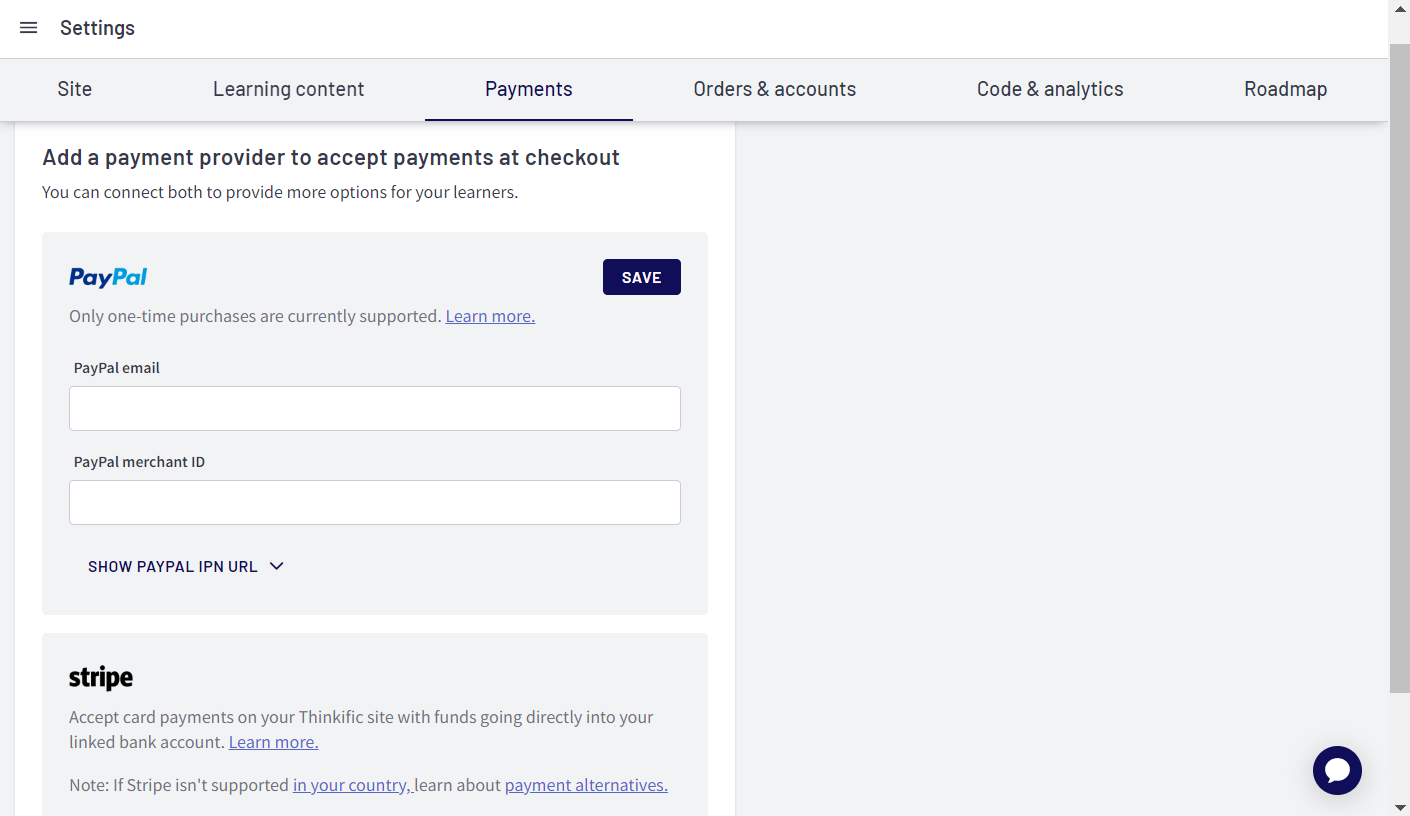
Both integrate with Stripe and PayPal. Thinkific’s built-in payment processor has additional features.
Both Kajabi and Thinkific integrate with Stripe and PayPal for payment processing. They also accept external payment gateways, but you’ll have to use Zapier for automation.
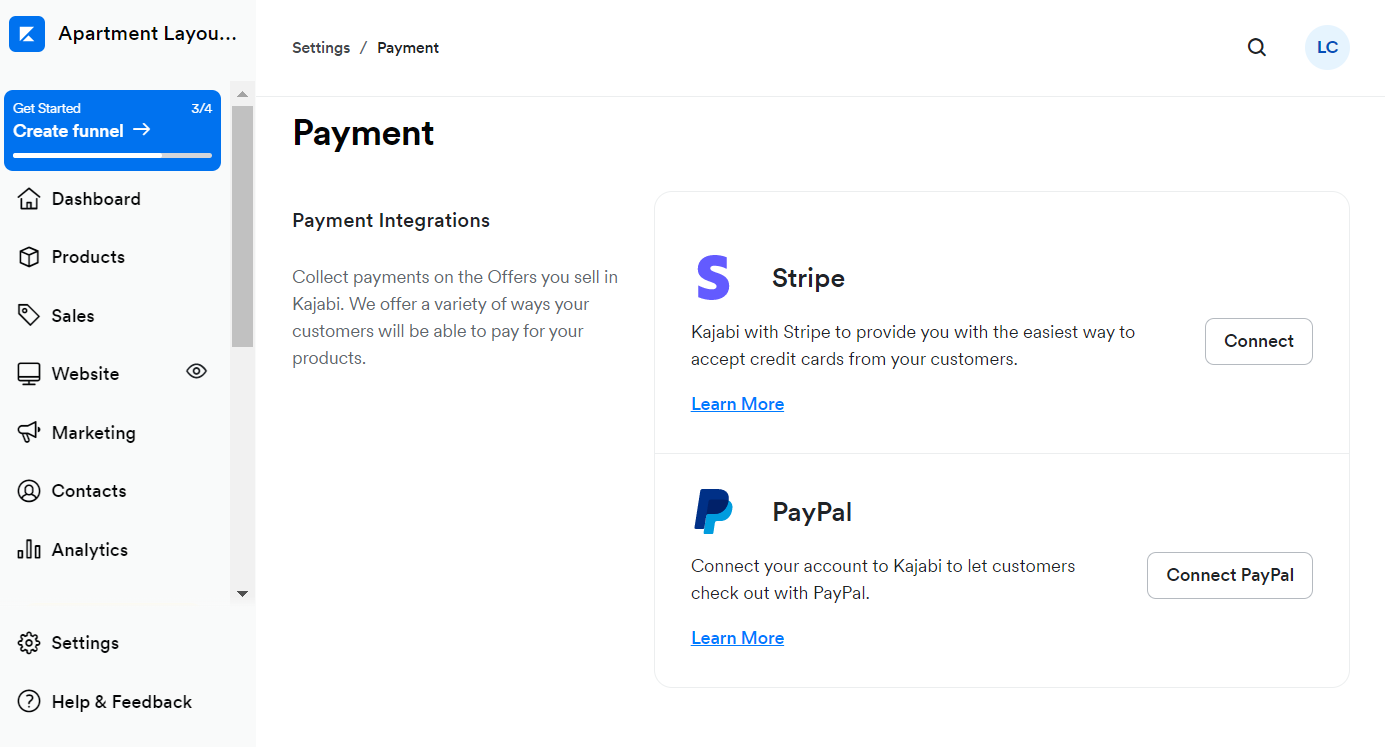
Thinkific offers a native payment processor, named Thinkific Payments, which allows creators to manage orders, payouts, refunds, and shared revenue from the dashboard. It charges 2.9% per transaction — a card-network pass-through, with no Thinkific platform fee on paid plans — and is available to creators in the USA, Canada, UK, EU, Switzerland, Norway, Singapore, Hong Kong, Australia, and New Zealand. Creators in the USA, Canada, UK, and EU who stick with Stripe or PayPal instead pay an extra third-party gateway fee.
Both have order bumps and upsells. Kajabi also has downsells.
Upsells and order bumps increase your chances of selling more products at once. Order bumps will show up to your customers before checking out and offer related products, while upsells allow you to present additional offers after purchase.
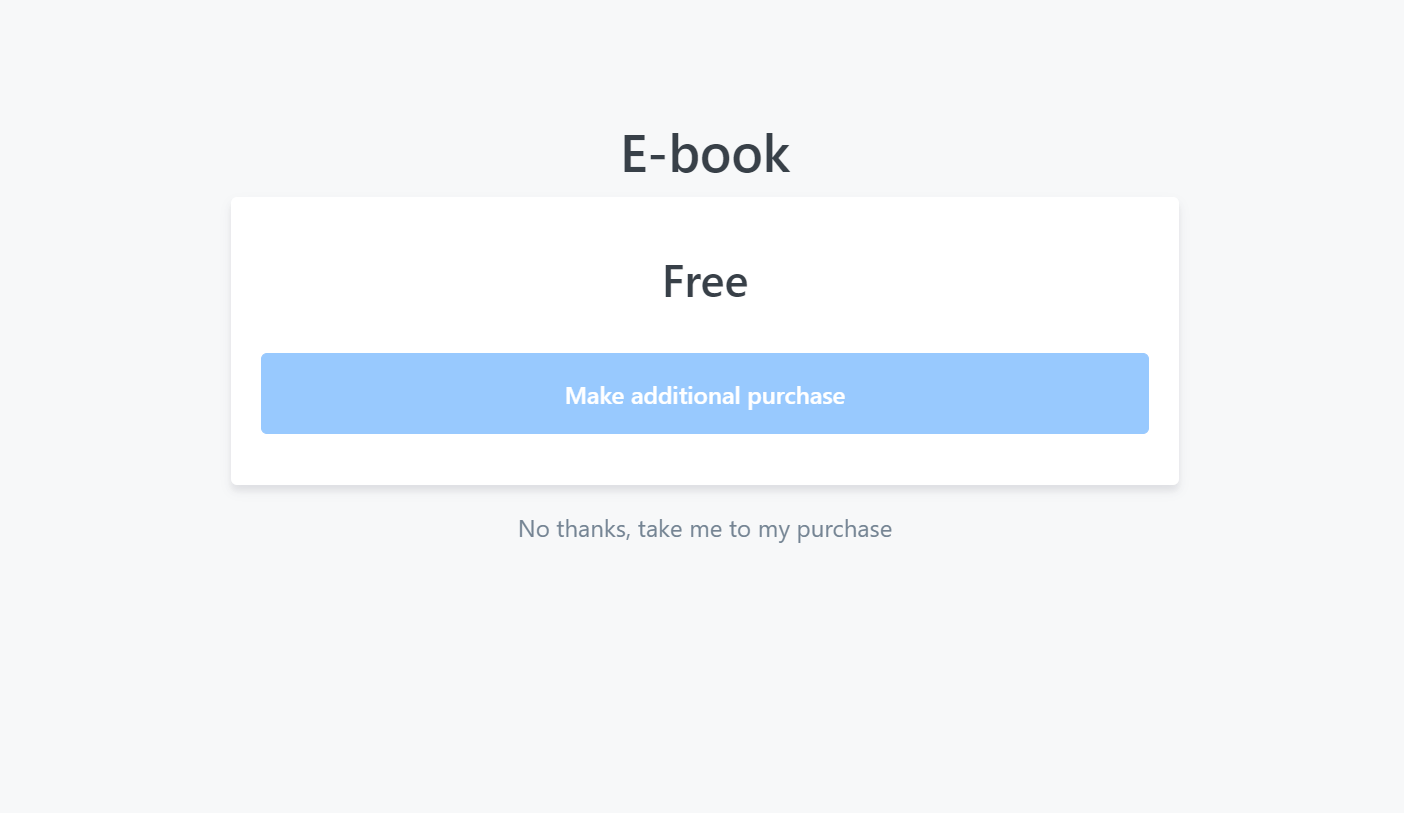
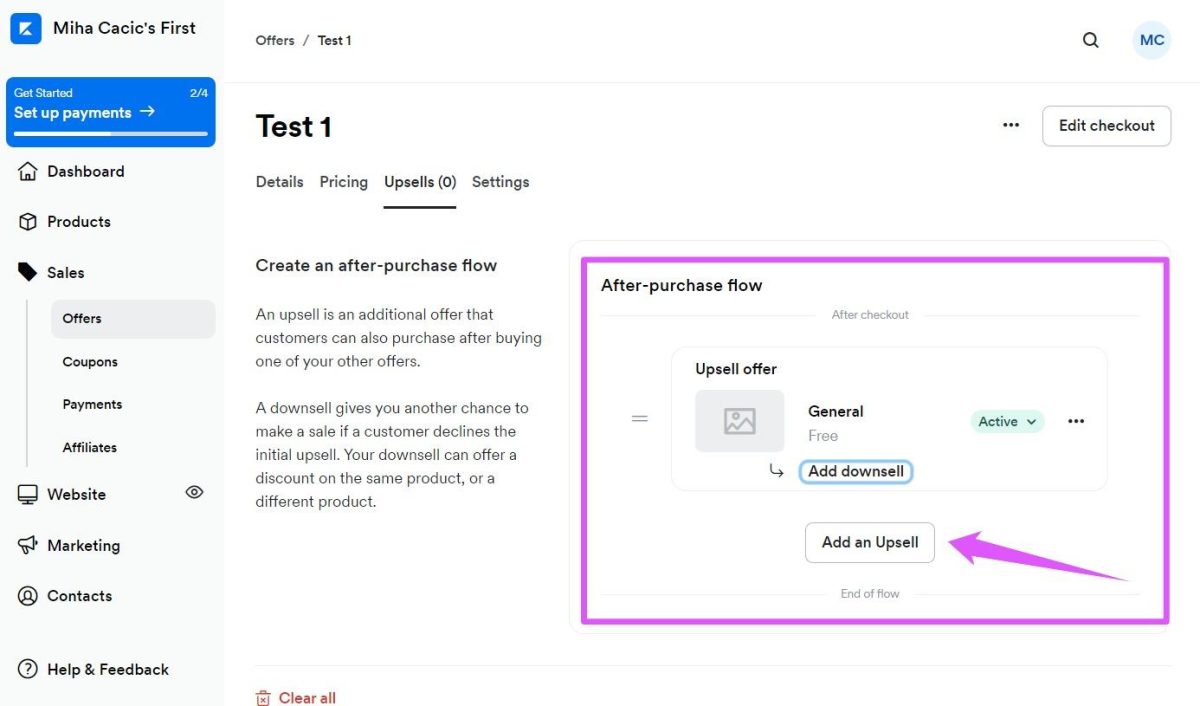
Kajabi offers order bumps and up to 10 upsells or downsells for a single offer. Downsells allow you to offer customers a more affordable option if they refuse an earlier upsell.
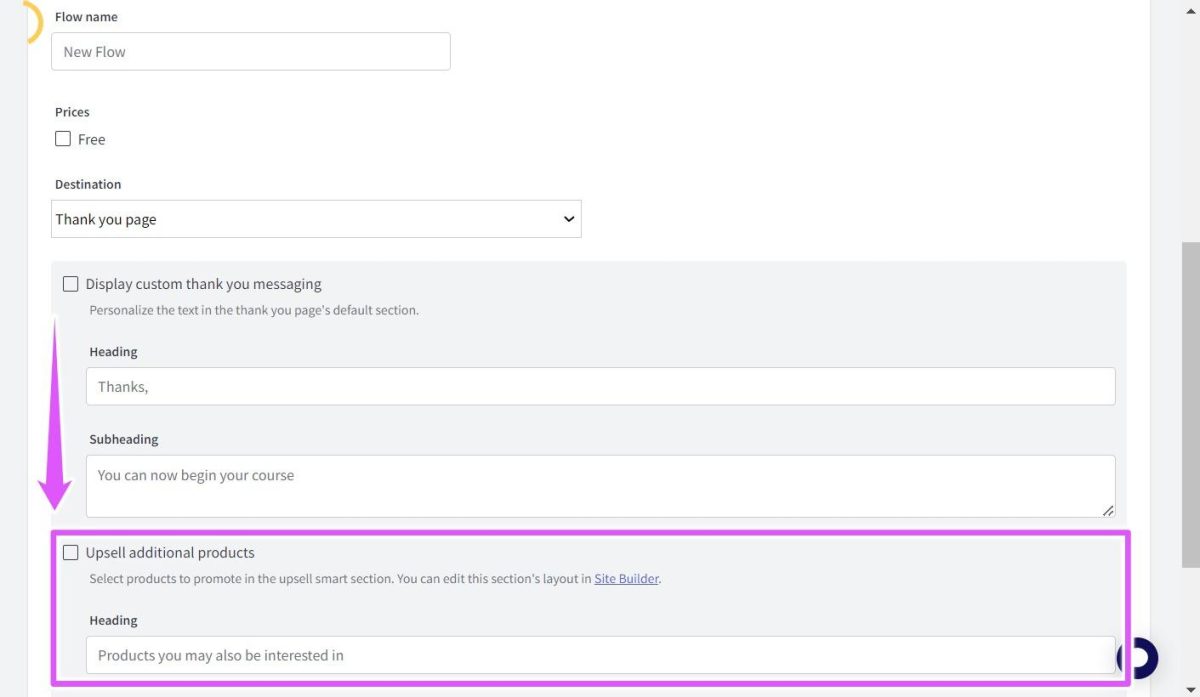
Thinkific offers order bumps only through its native payment processor, which covers most but not all countries. You can also add upsells as part of the after-purchase experience for your customers.
Winner: Kajabi has better after-purchase options because of its downsells. However, if you reside in one of the eligible countries, Thinkific makes a better deal because of its built-in payment processor.
Kajabi vs Thinkific: Course Creation
Kajabi has all the essentials but Thinkific offers more advanced course creation tools and integrations.
| Kajabi | Thinkific |
|---|---|
| ⭐⭐⭐ | ⭐⭐⭐️⭐️⭐ |
Kajabi has more templates and themes for courses.
Kajabi’s outline tool and templates make it easy to set up courses. Added to that, there are over six ready-made themes, which heighten your customer experience.
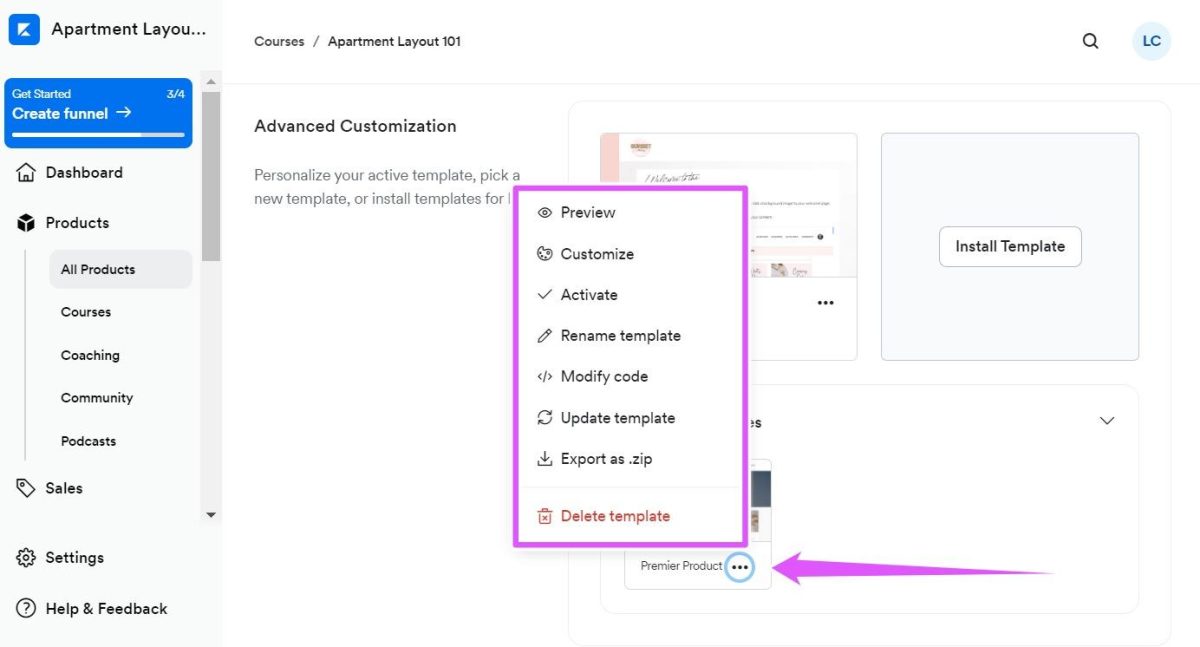
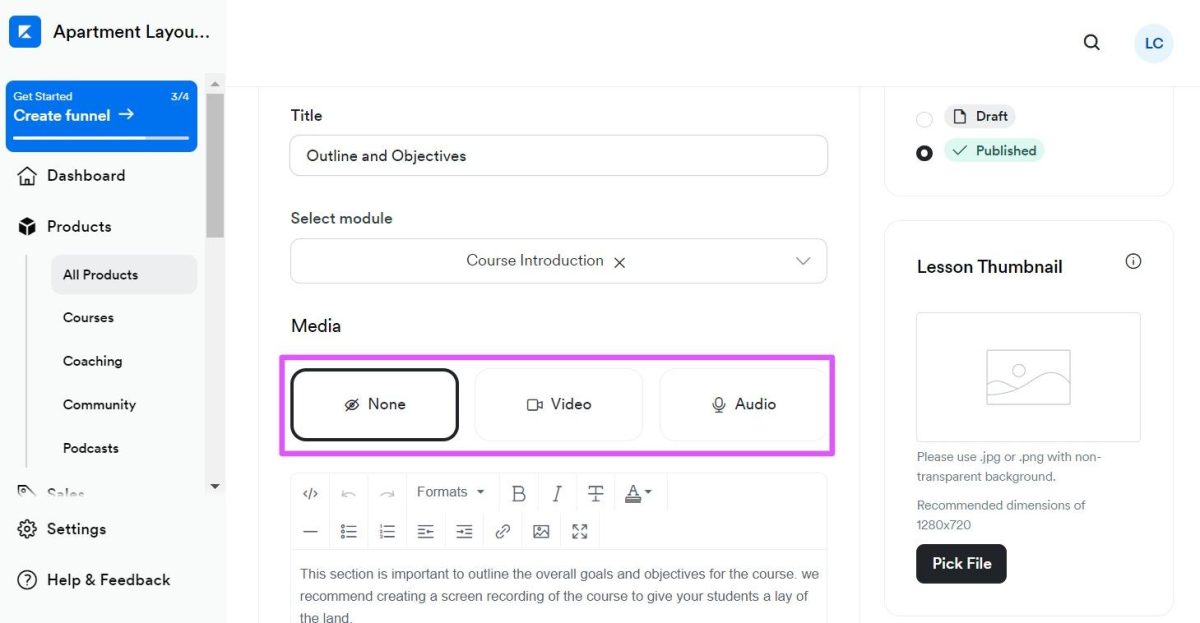
For Kajabi’s lessons, creators can attach text, video, and audio to each lesson. Lessons are grouped into modules and submodules for user-friendly navigation.
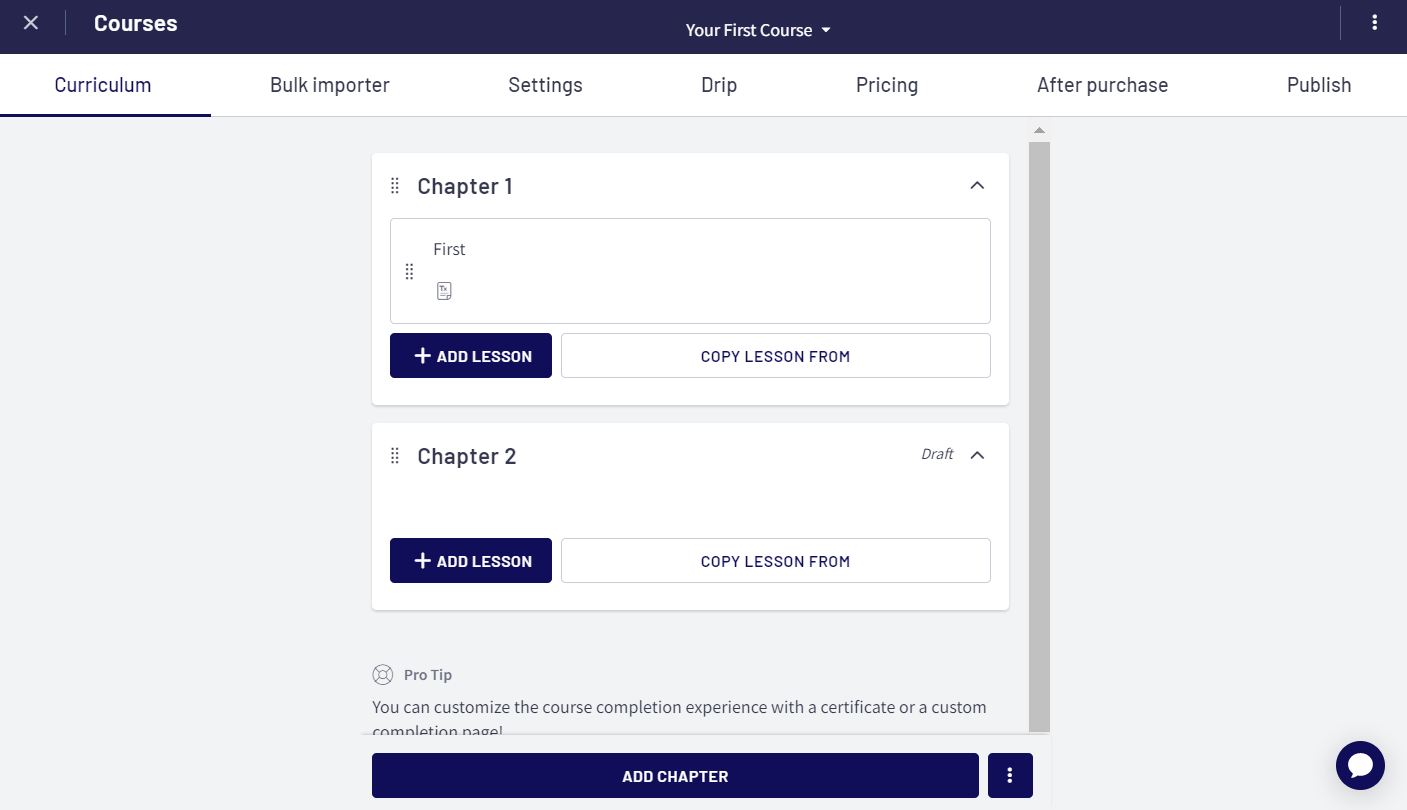
Meanwhile, Thinkific’s outline in the course builder is made of chapters including separate lessons or assessments.
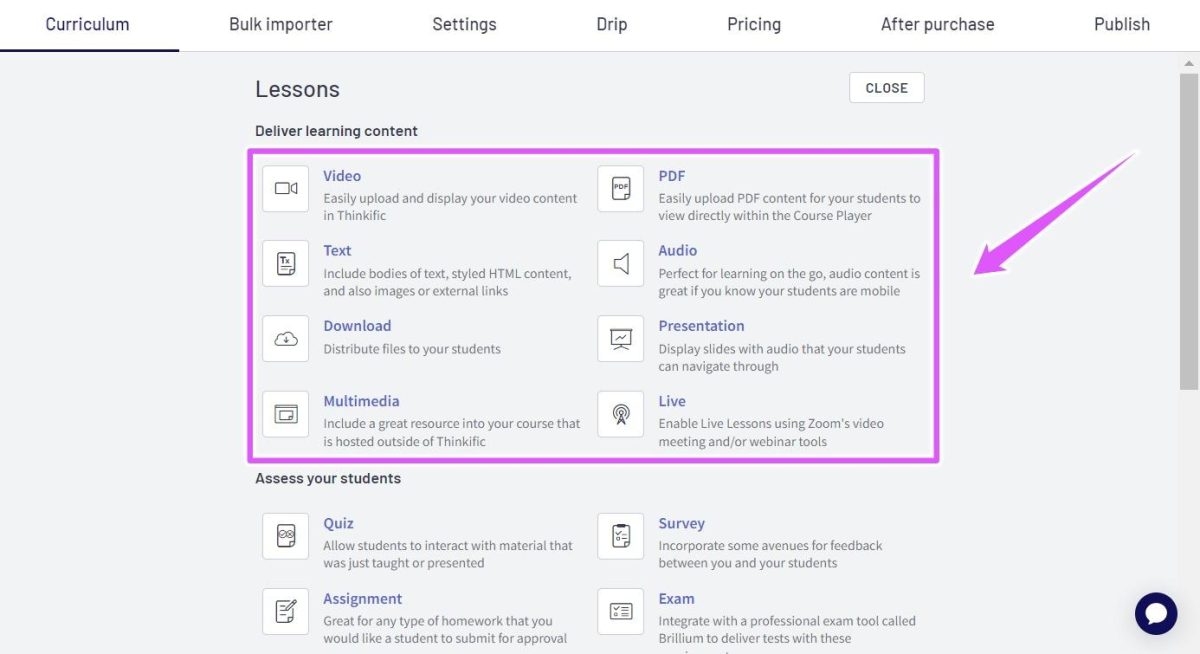
Lesson formats include video, audio, downloads, text, PDF, presentation, multimedia, and live video hosting or webinars with Zoom.
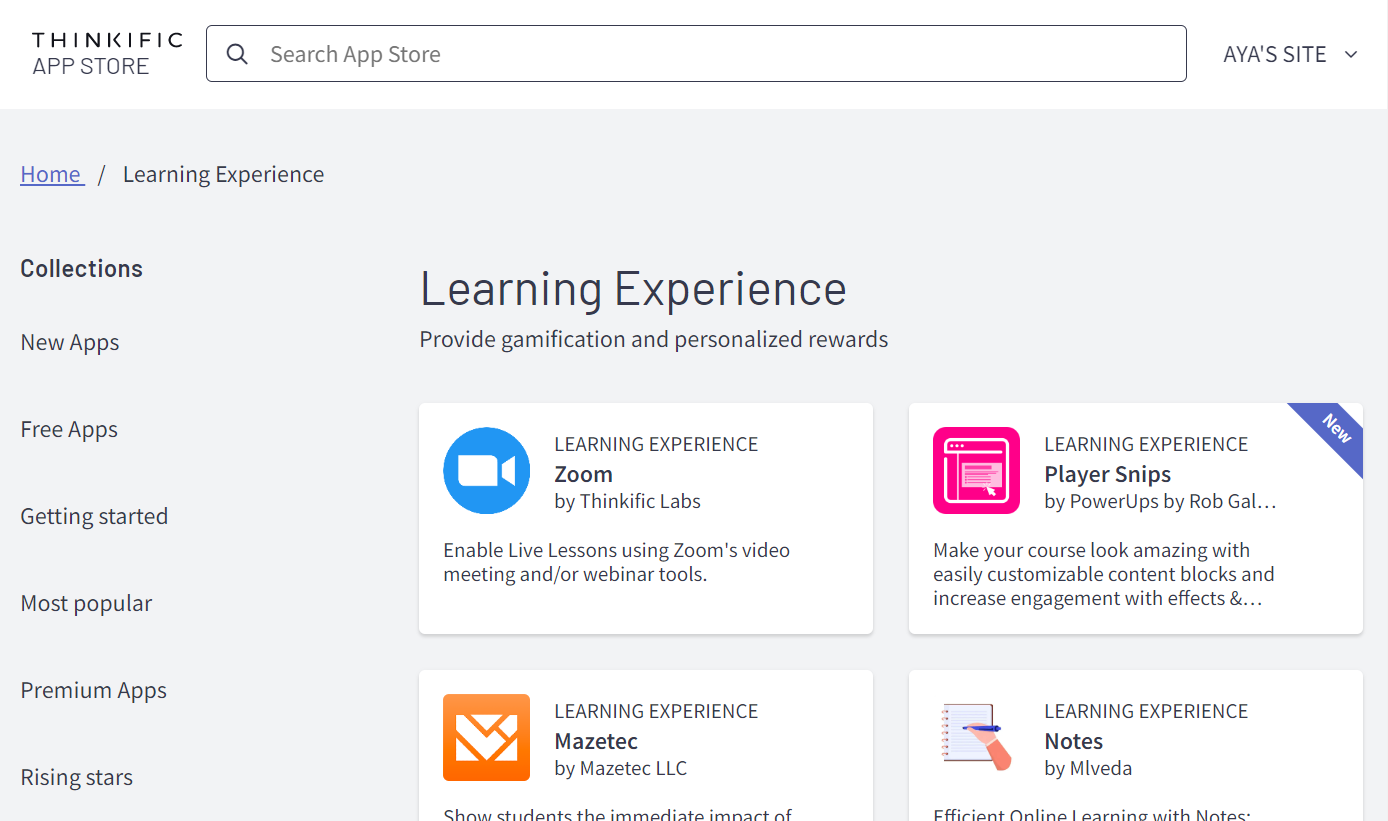
Added to that, Thinkfic allows hosts to create more interactive lessons using third-party integrations available on their app store.
Both offer completion certificates and graded assessments but Thinkific has more assessment options for its top tiers.
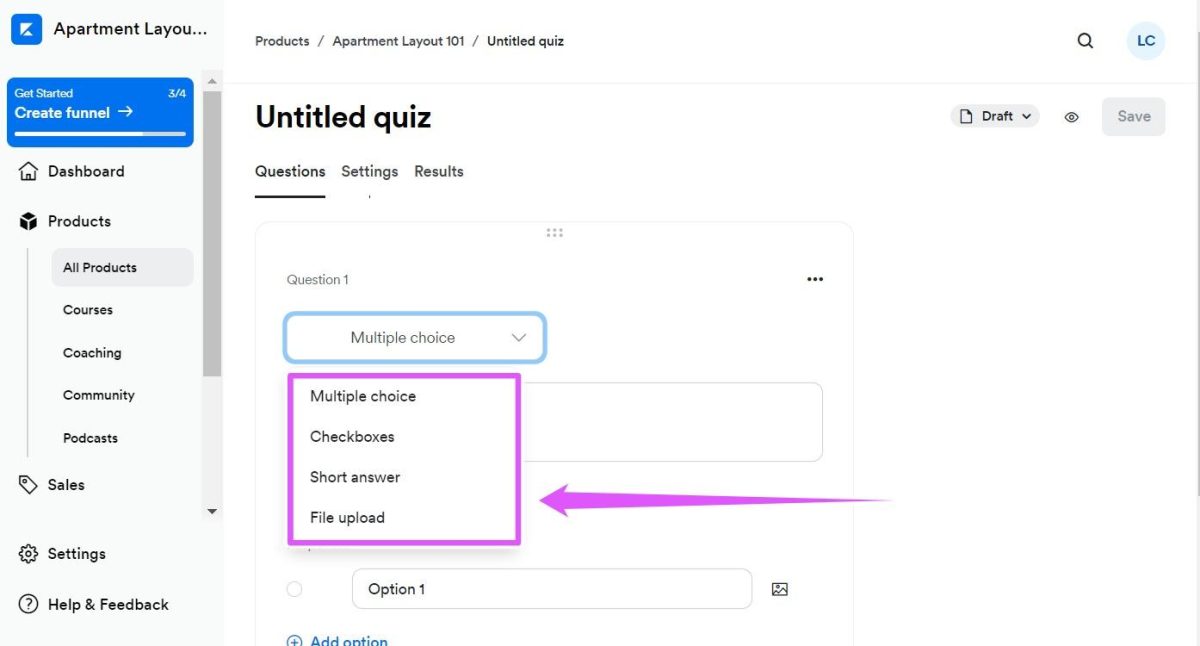
Setting up assessments in Kajabi is more intuitive because question types and grading options are all in one place.
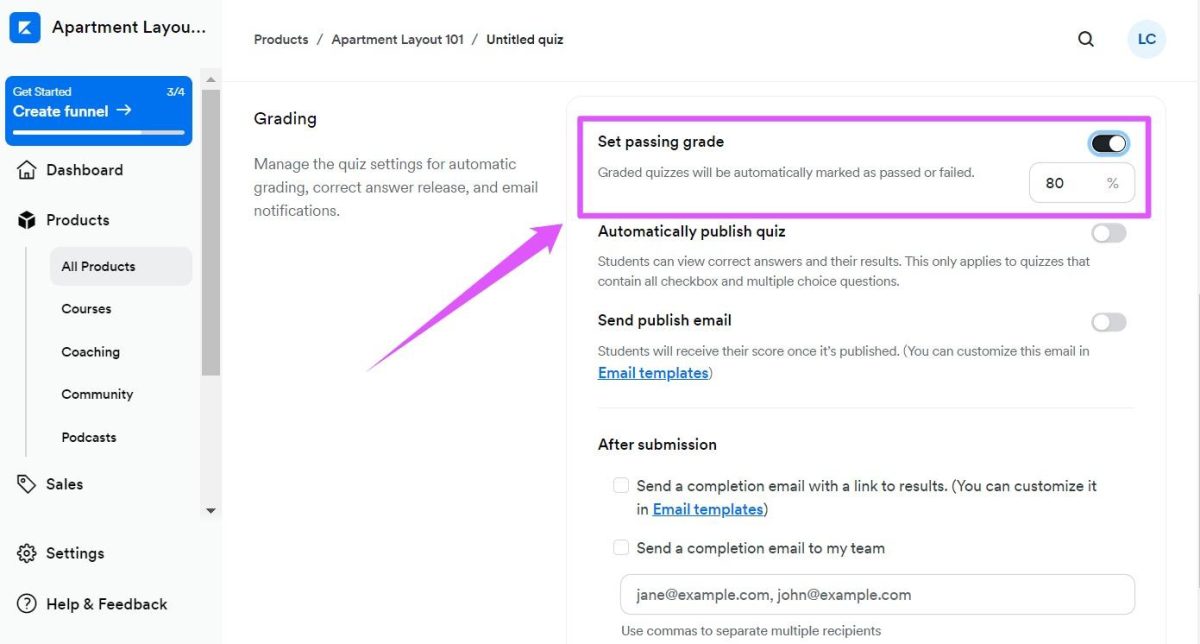
You can also set a passing grade to ensure that students have enough skills for the coming lesson.
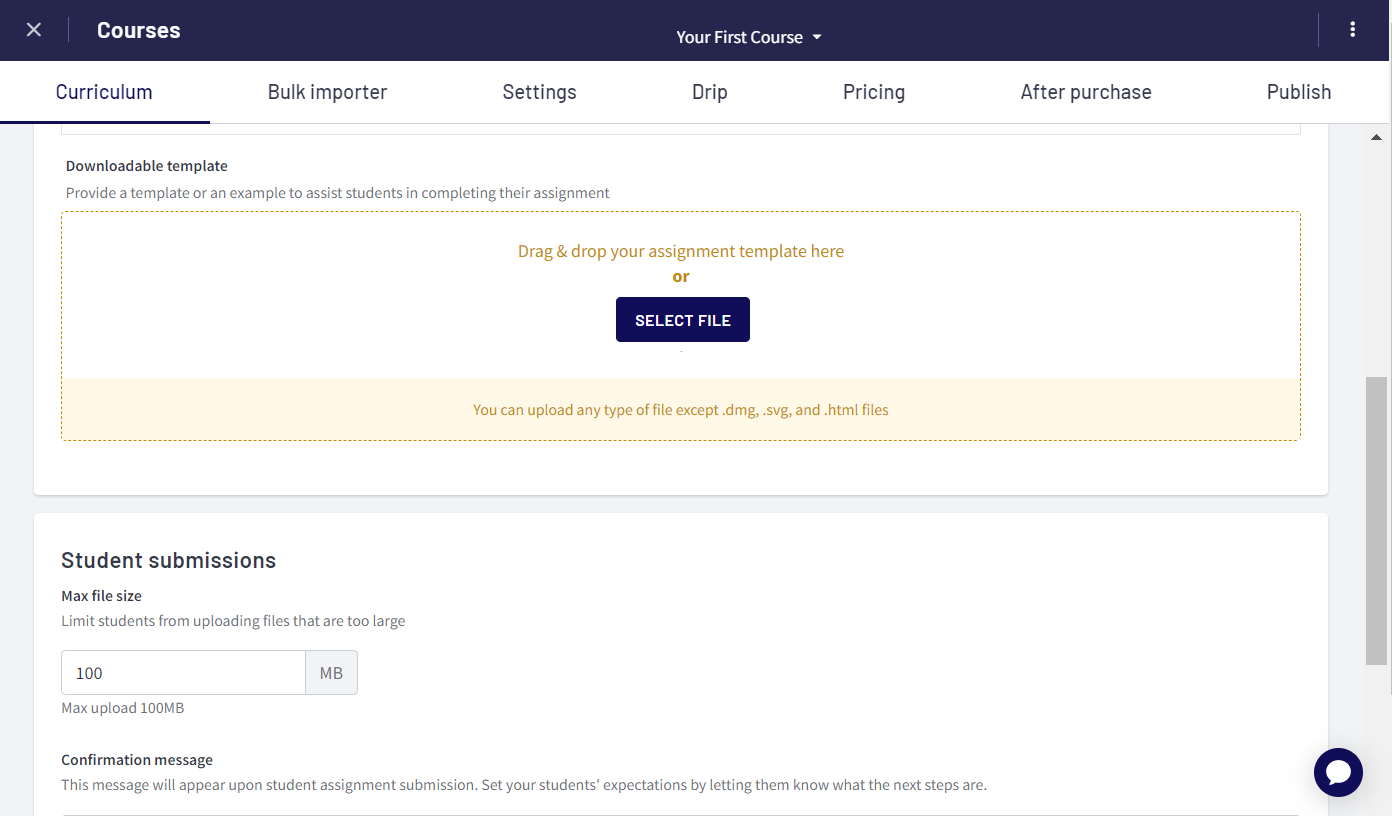
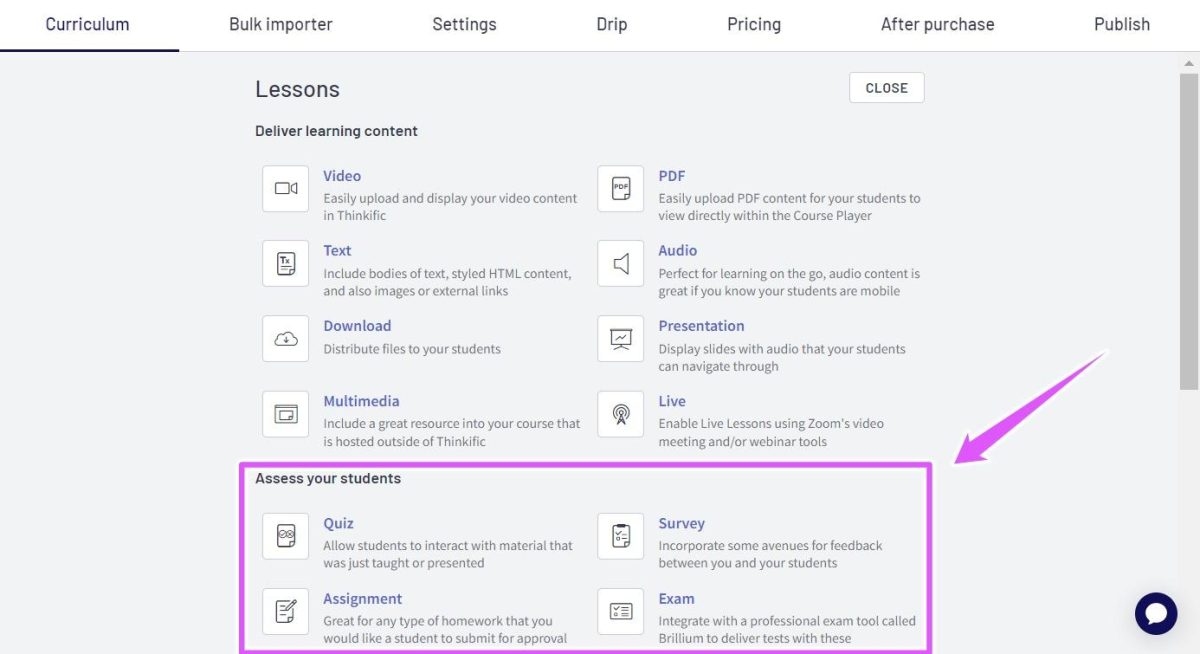
You’ll find Kajabi’s assessment options in Thinkific course builder too, but they’re scattered among four categories: quizzes, assignments, surveys, and exams. For instance, quizzes are graded and assessments are dedicated to student uploads.
Thinkfic’s exams allow hosts to integrate with Brillium, but they’re only available within the Grow plan, the most expensive one.
Winner: Thinkific is superior for course creation because of its intuitive interface and multiple lesson types. Additionally, advanced paid integrations allow you to create more interactive assessments.
Kajabi vs Thinkific: Additional Products
Kajabi has more product types. Thinkific has better communities.
| Kajabi | Thinkific |
|---|---|
| ⭐⭐⭐⭐️⭐ | ⭐⭐⭐️ |
Both monetize communities and memberships. Kajabi has built-in podcasts and coaching.
You can create membership sites in Kajabi using one of its course templates and receive recurring income as you’re developing the main course content. Podcasts and coaching are stand-alone products in Kajabi, which are limited based on pricing tiers.
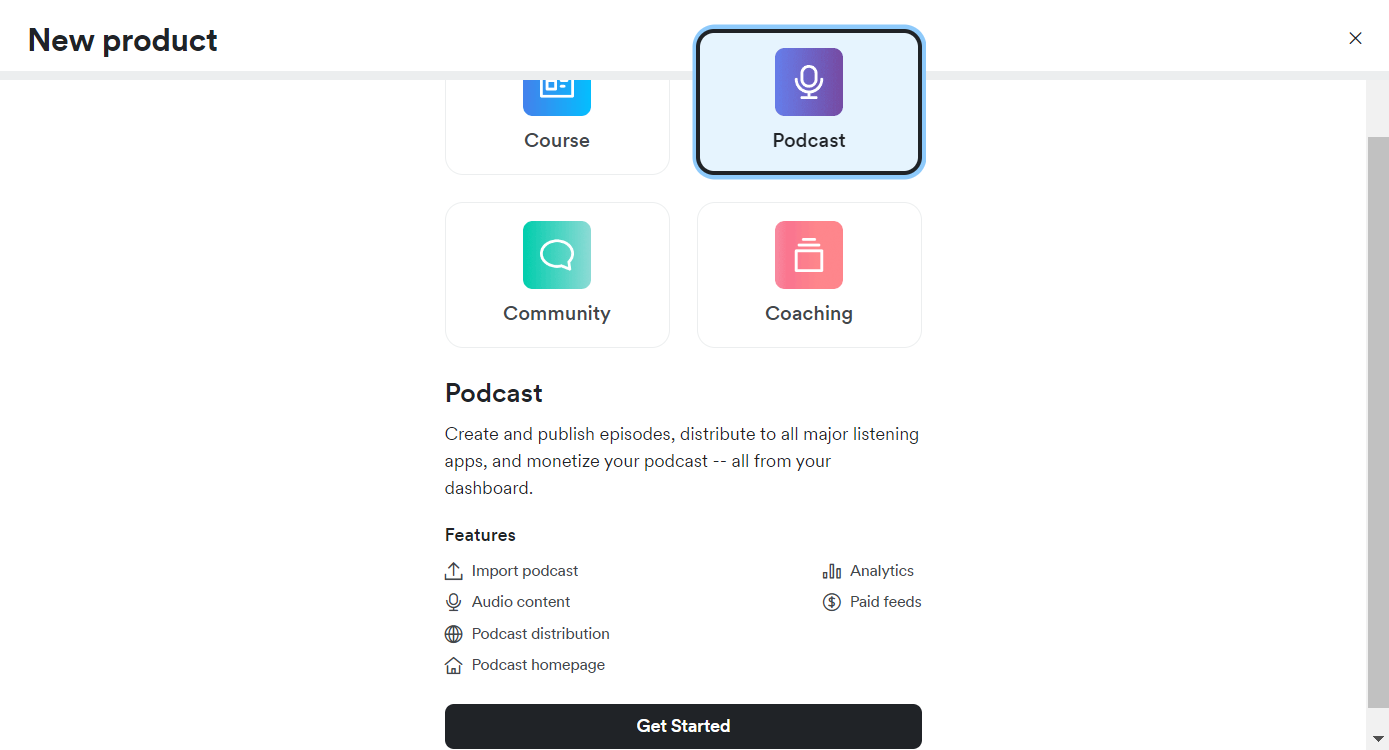
Thinkific only monetizes courses, communities, and memberships. Communities allow your students to interact, which can be included as part of membership perks.
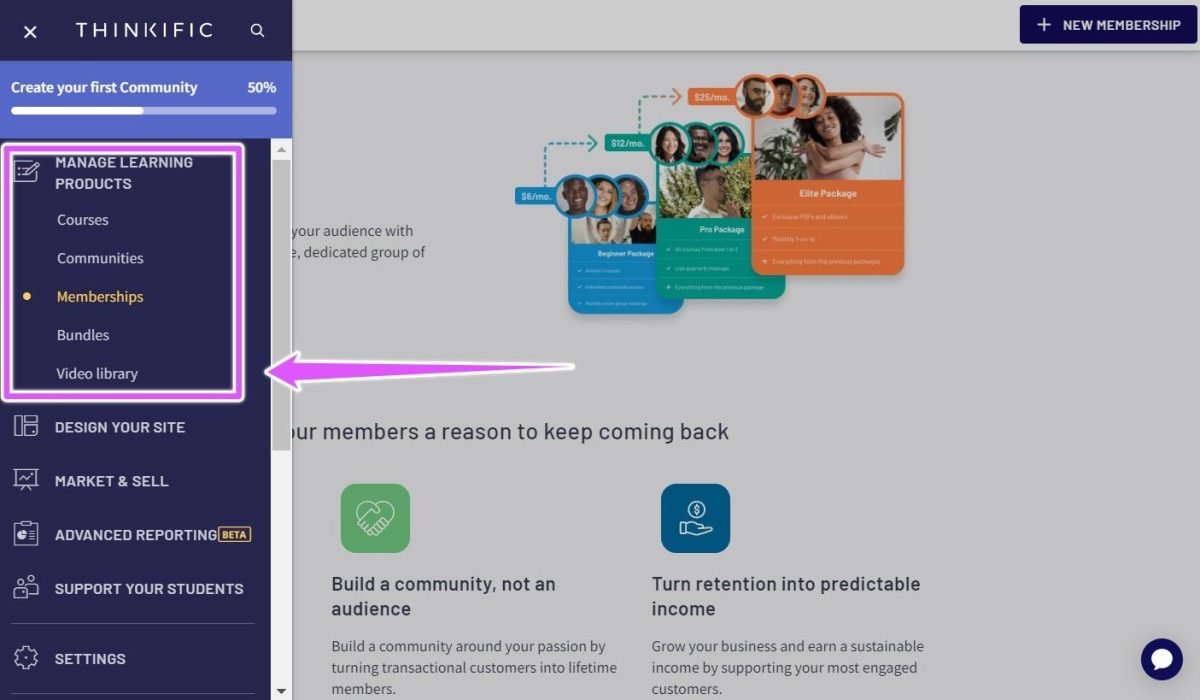
Kajabi’s built-in communities can replace Facebook groups.
Kajabi communities allow hosts to create circles, challenges, and live meetups. However, they’re a basic alternative to Facebook groups. Post types and attachments are limited, which makes the community less interactive.
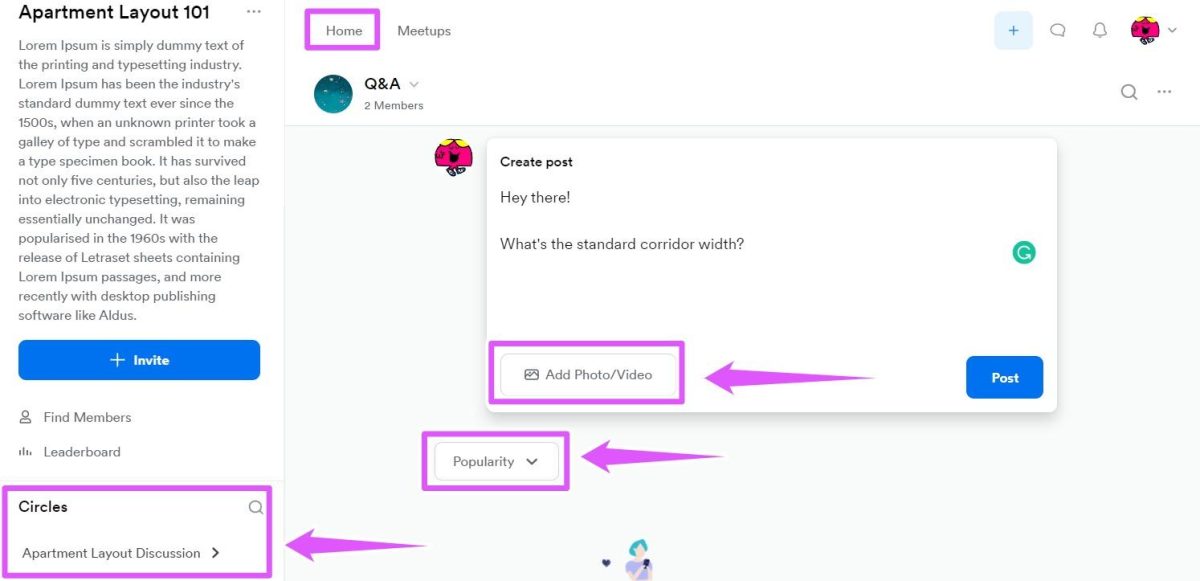
On the other hand, Thinkific community posts allow members to attach images, videos, and files. Posts are categorized into spaces, which can be easily accessed from the sidebar. This makes Thinkific communities more intuitive and easier to navigate, compared to Kajabi communities.
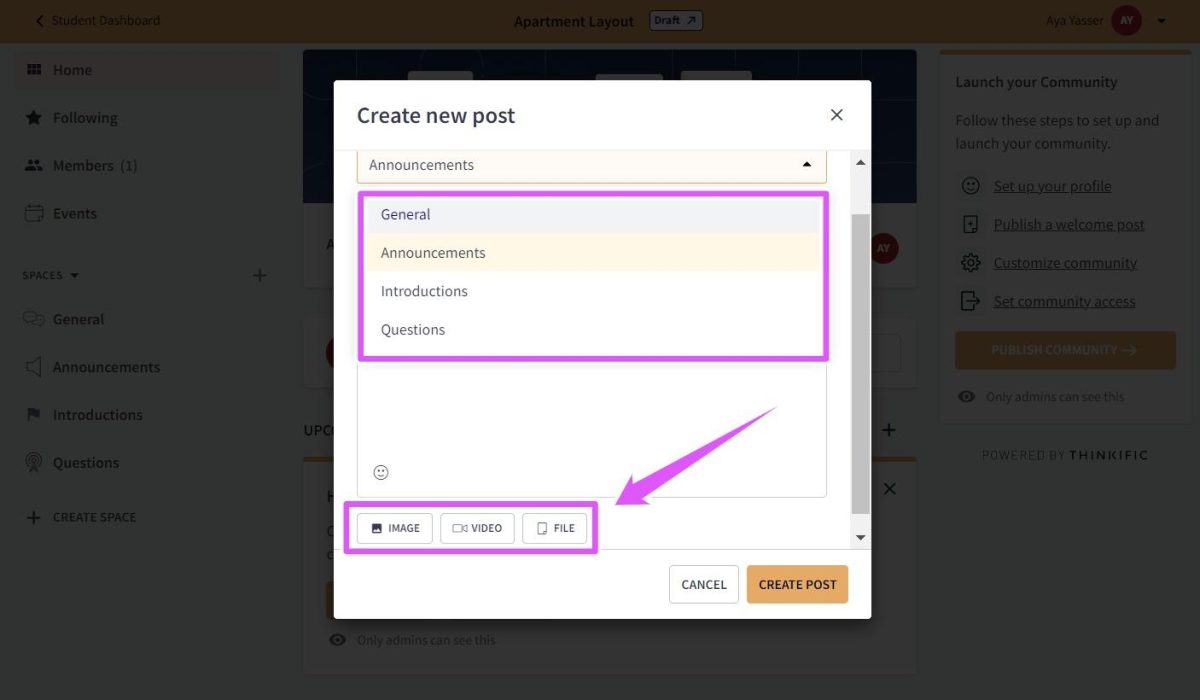
Even more, Thinkific has additional community customization options, including appearance and SEO settings.
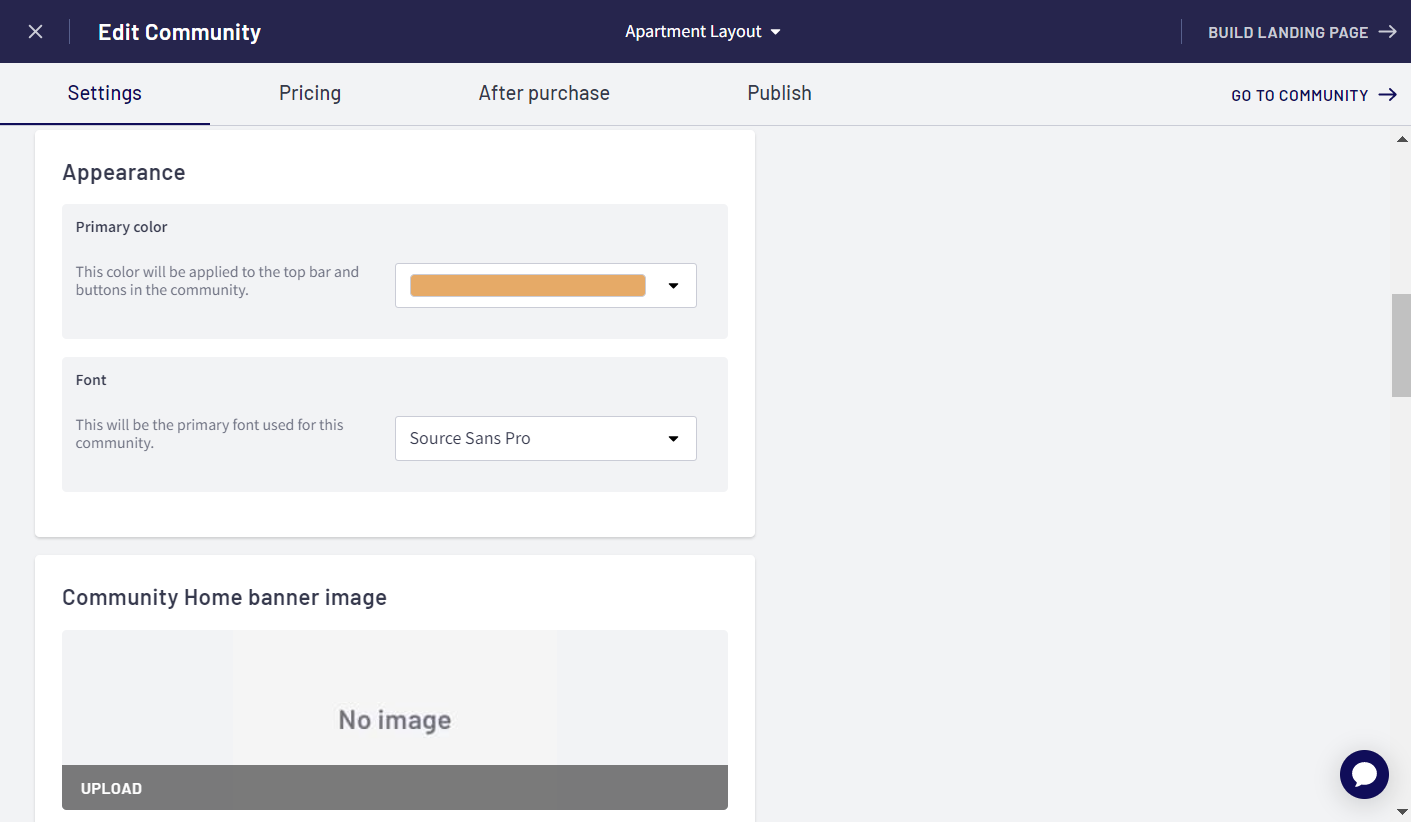
Winner: Kajabi offers more ways for repurposing your expertise with its podcasts and coaching program. Still, Thinkific is a better option for peer-to-peer learning because of its interactive communities, which can build long-term relationships with your customers.
Kajabi vs Thinkific: Marketing Tools
Kajabi has everything educators need to boost sales. Thinkific has more integrations.
| Kajabi | Thinkific |
|---|---|
| ⭐⭐⭐⭐️⭐ | ⭐⭐⭐️ |
Kajabi takes the lead with its built-in funnels. Thinkific has less advanced email tools.
Not only does Kajabi provide a reliable email marketing tool, but it also offers sales funnel templates for automated workflows. You can easily connect multiple marketing pipelines for maximum growth.
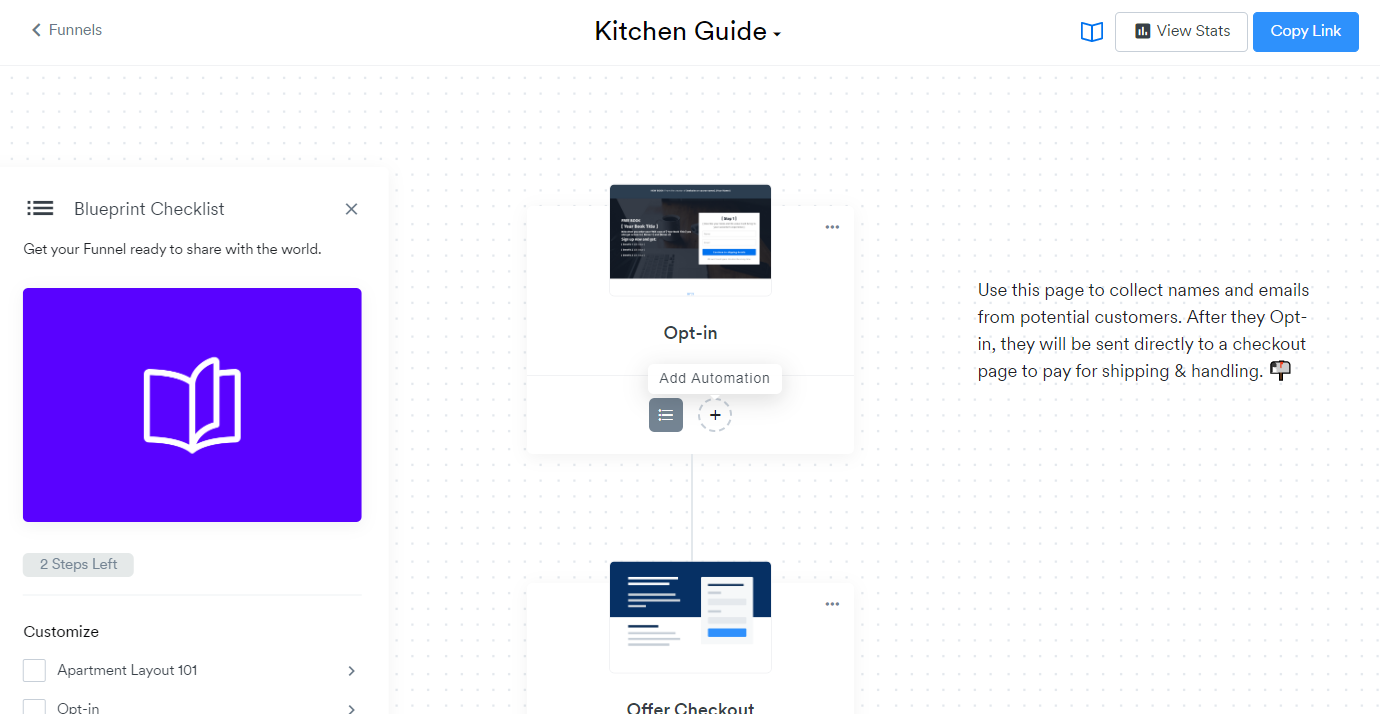
In contrast, Thinkific has no built-in email, but it integrates with multiple third-party alternatives, including ConvertKit, Mailchimp, and ActiveCampaign.
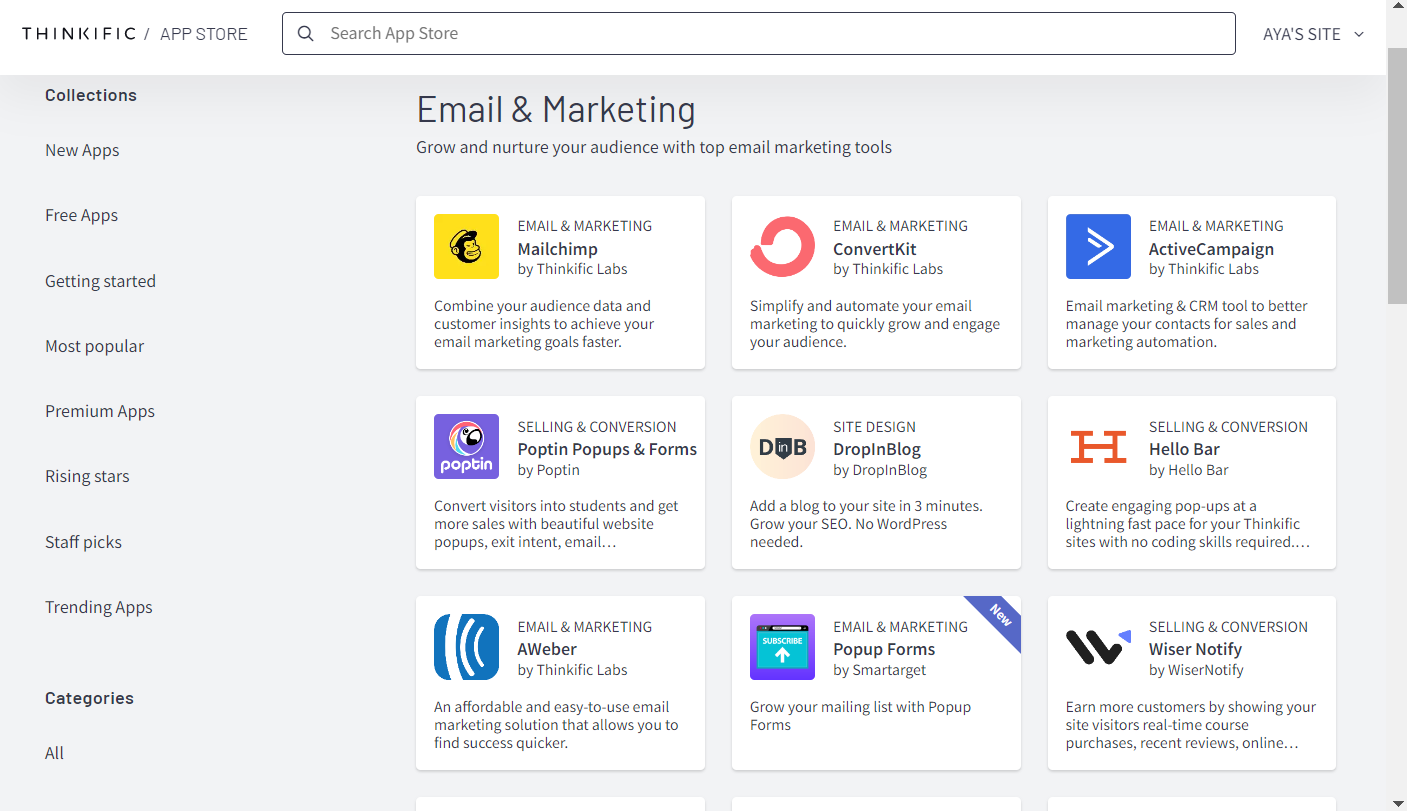
Thinkific has more integrations. Kajabi offers some replacements for the built-ins.
Kajabi has a few professional integrations that can replace its built-in tools, but they’re limited to sales and marketing categories.
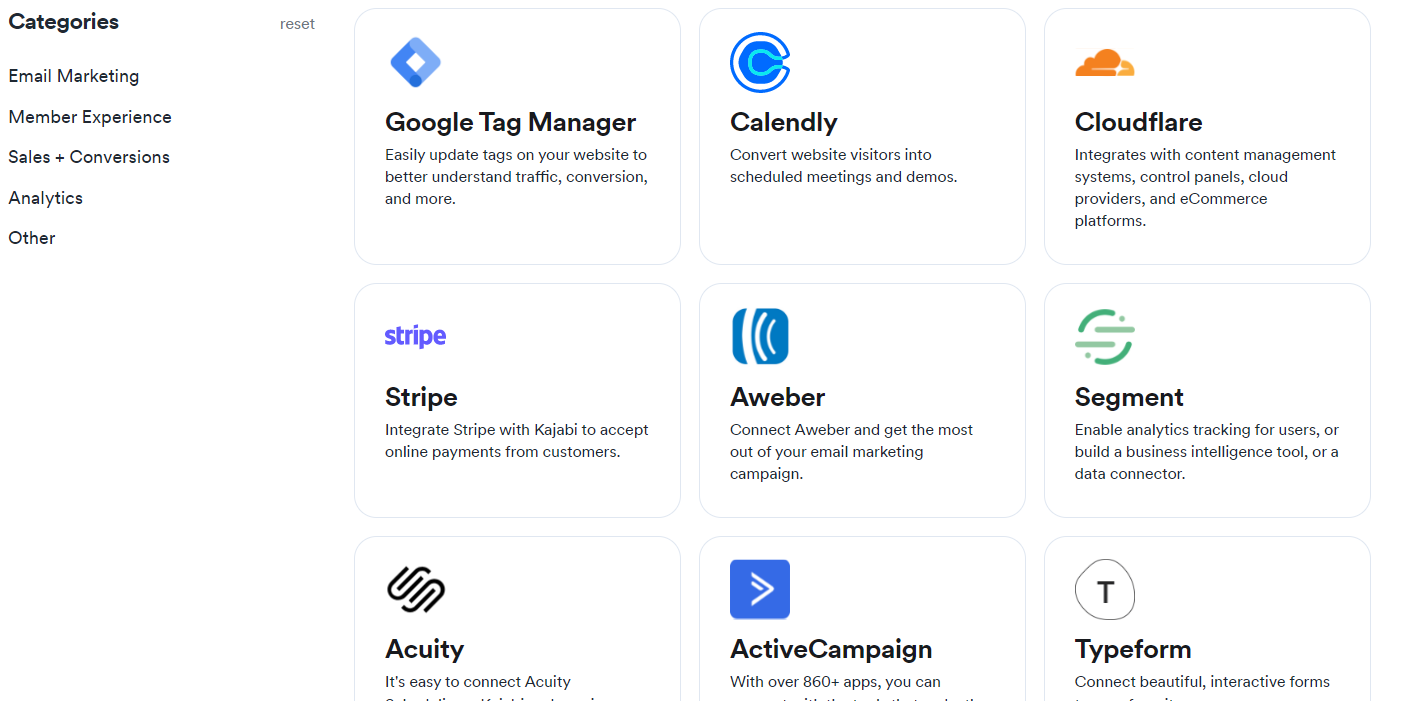
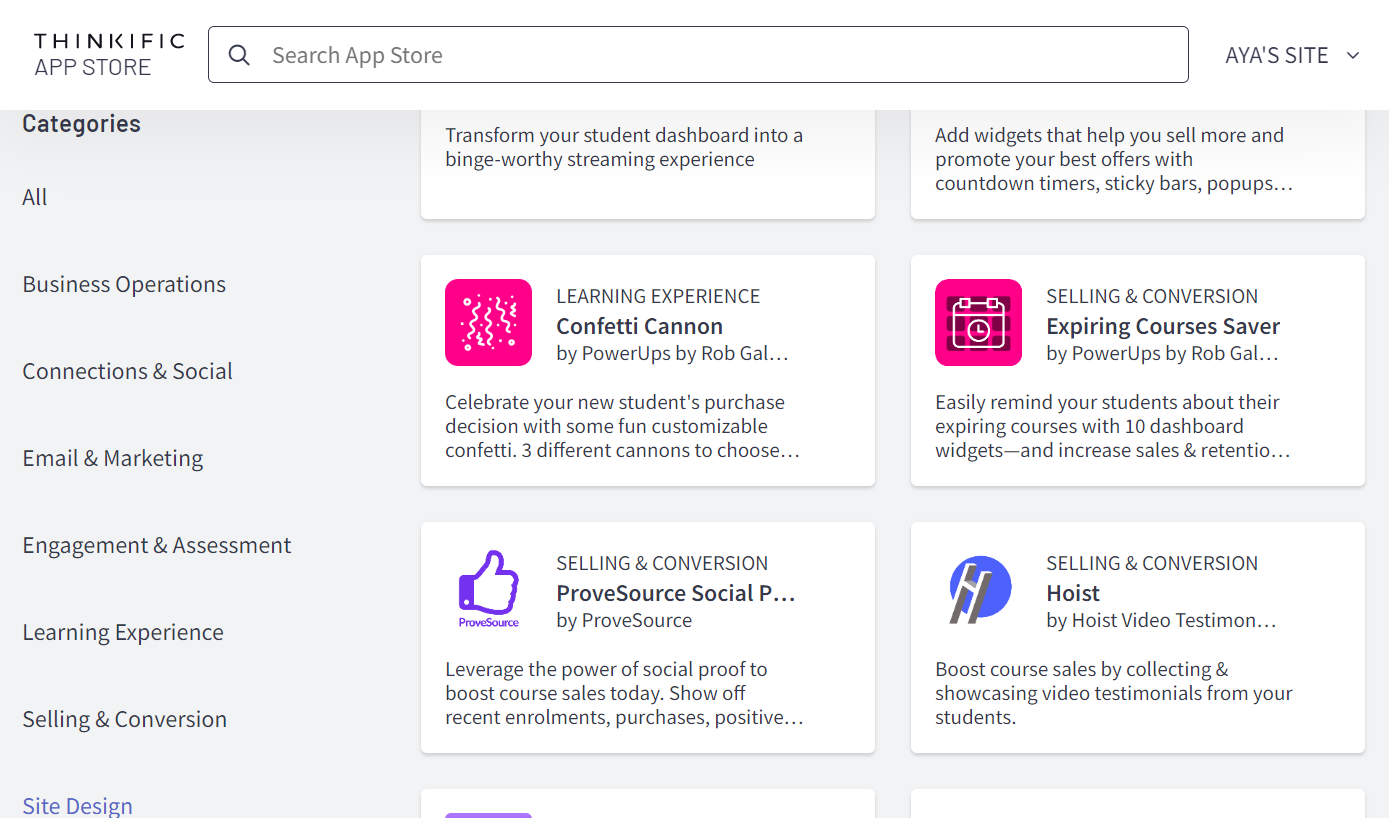
Thinkific, on the other hand, has more than 90 integrations. Categories include business operations, site design, and learning experience.
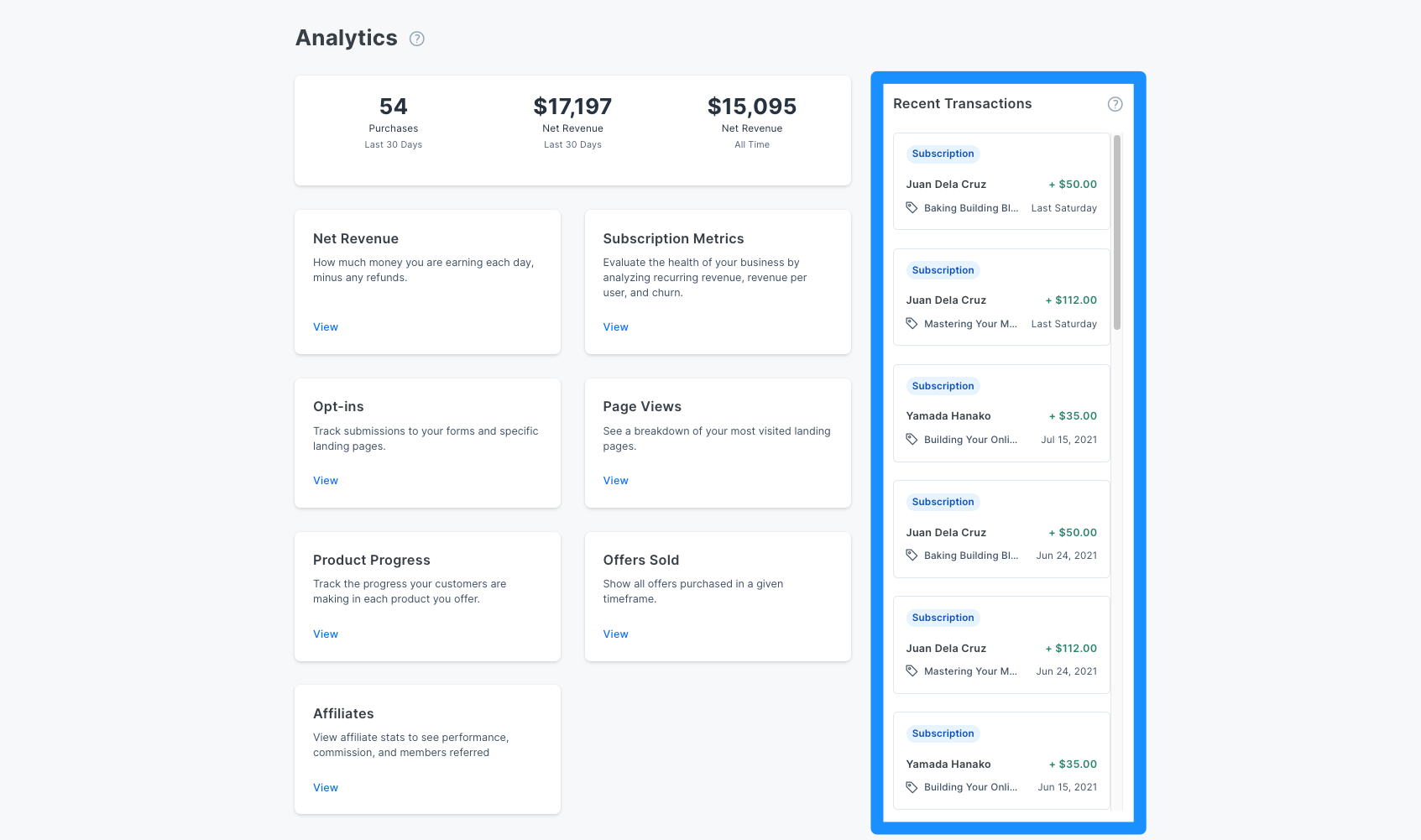
Both have built-in analytics. Thinkific offers advanced reporting for top plans.
Kajabi has advanced insights for all plans, including revenue, page views, Opt-ins, and more.
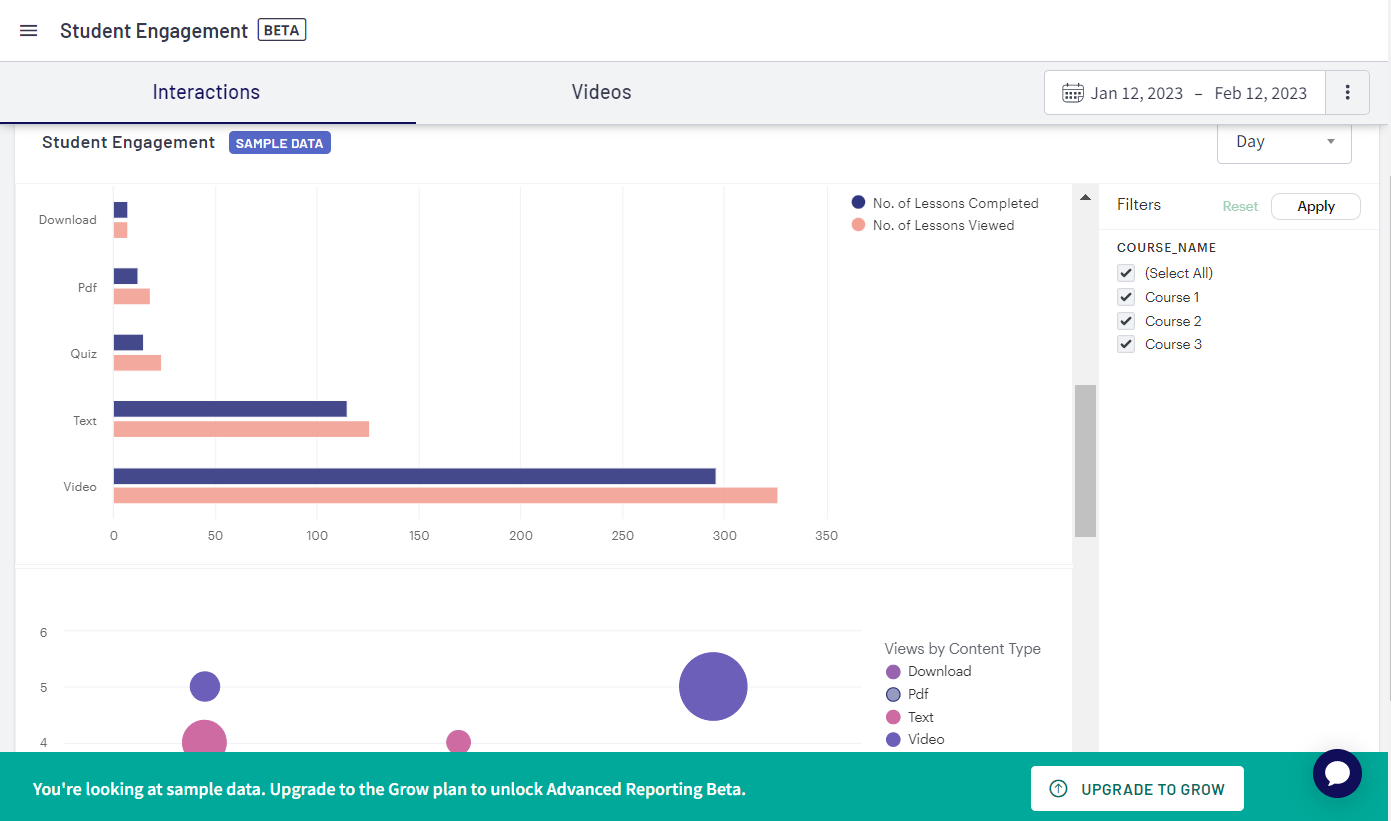
Similarly, Thinkific has detailed analytics in its advanced reporting section, but that’s only available in the Grow plan.
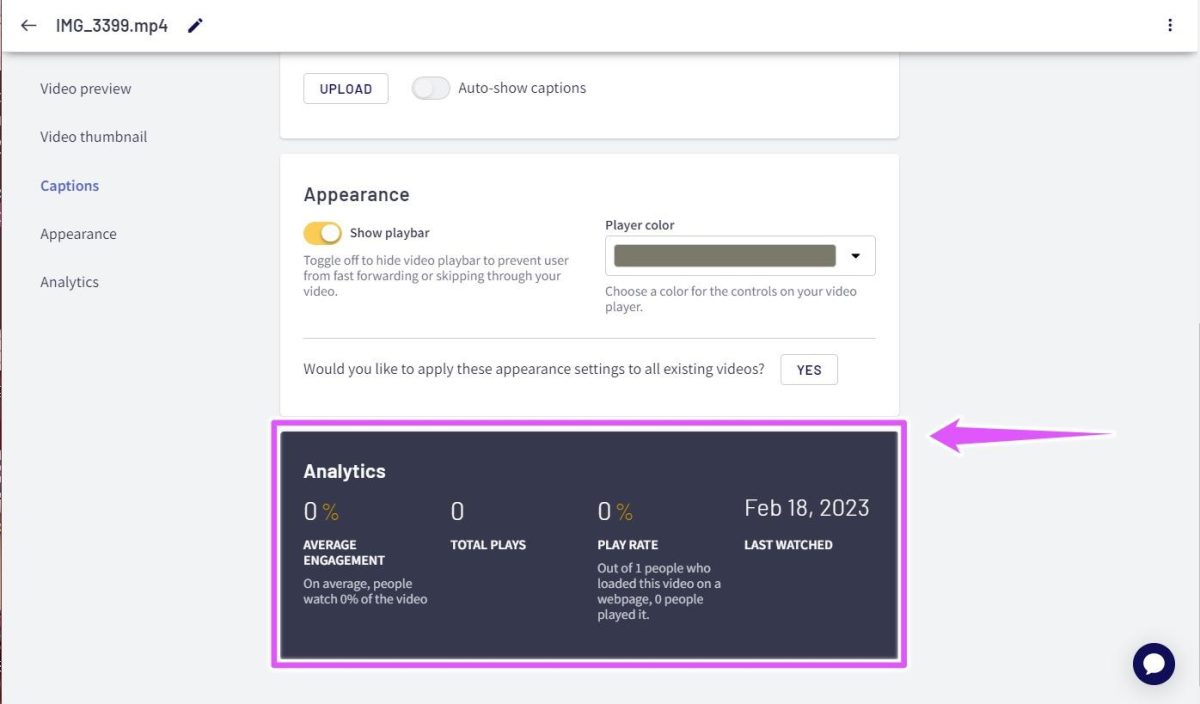
At the same time, Thinkific offers general analytics of video uploads for all plans, which is helpful for creators testing out new courses.
Kajabi can replace WordPress. Thinkific has basic website features.
Kajabi stands out with its blog feature and multiple pages for websites. Its website builder gives a better user experience with professional fonts and well-designed page blocks. The drag-and-drop website templates provided make the setup seamless. Kajabi’s websites are outstanding since they integrate with email lists and landing pages.
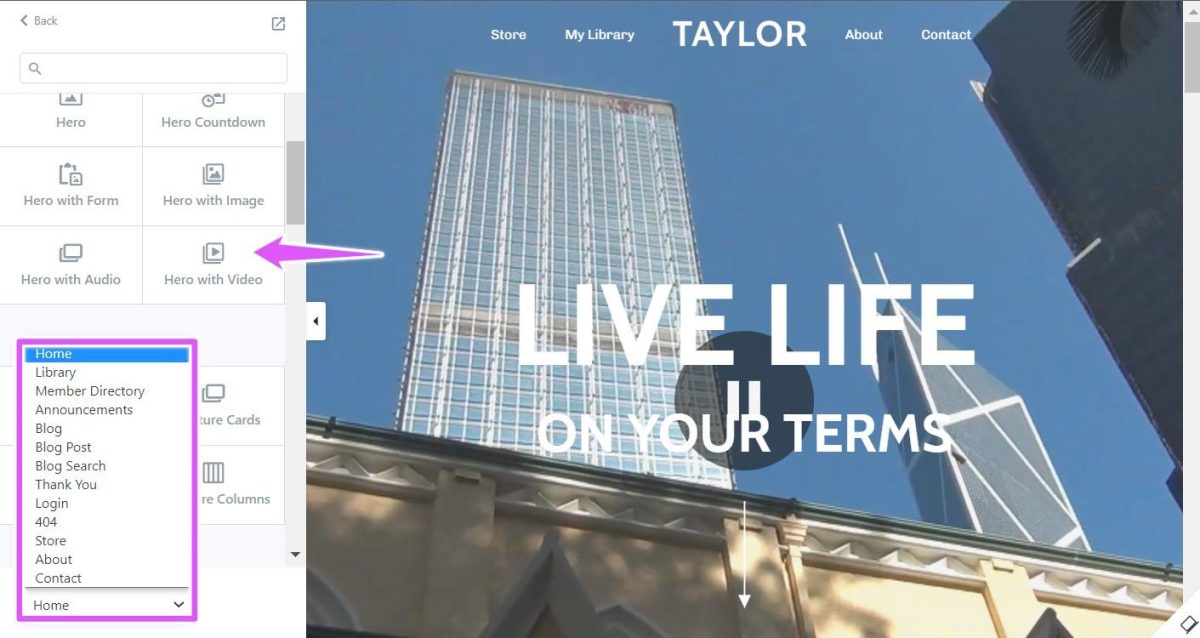
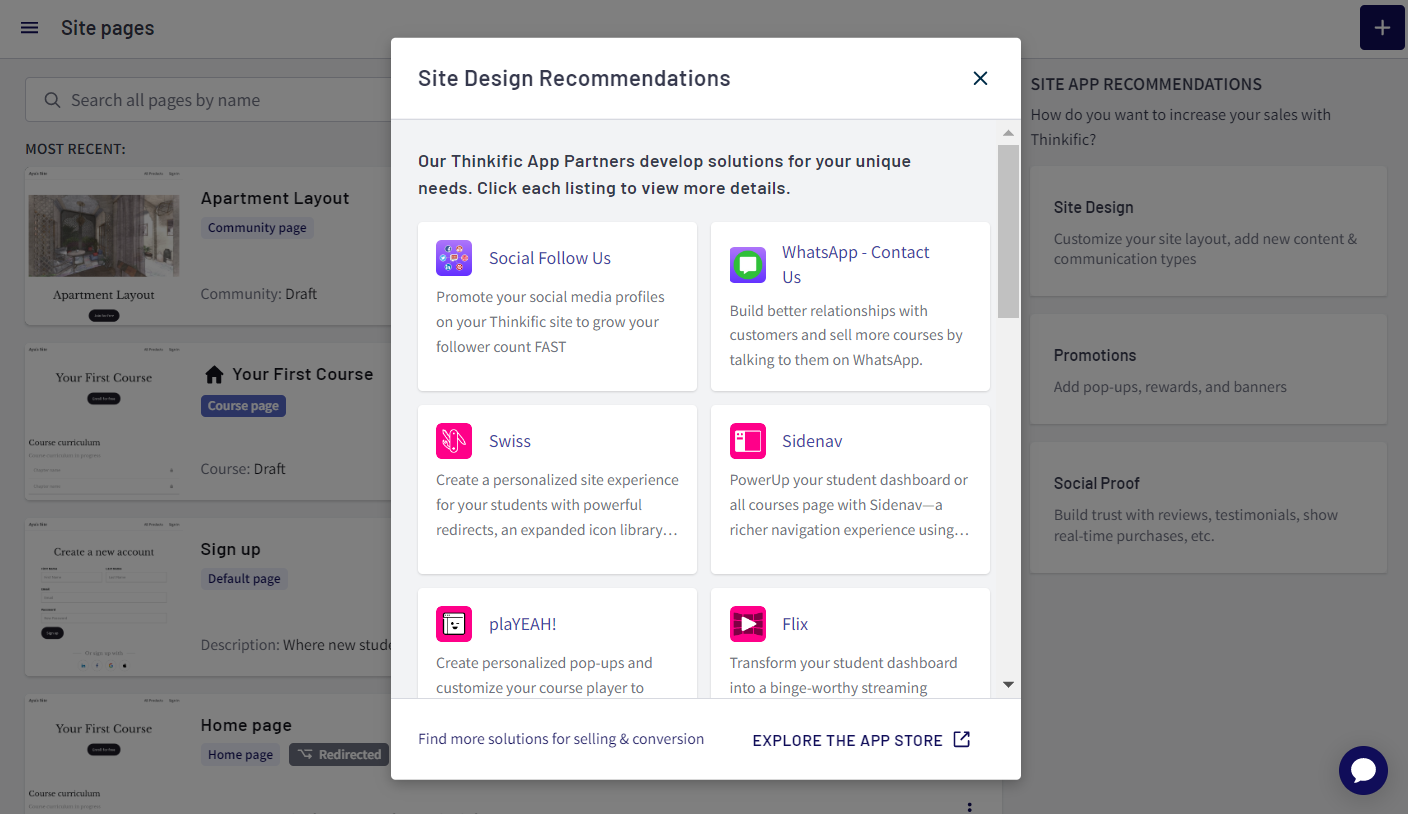
Meanwhile, Thinkific page builder offers a few default homepage templates and a few custom pages, but there is no option for creating blogs.
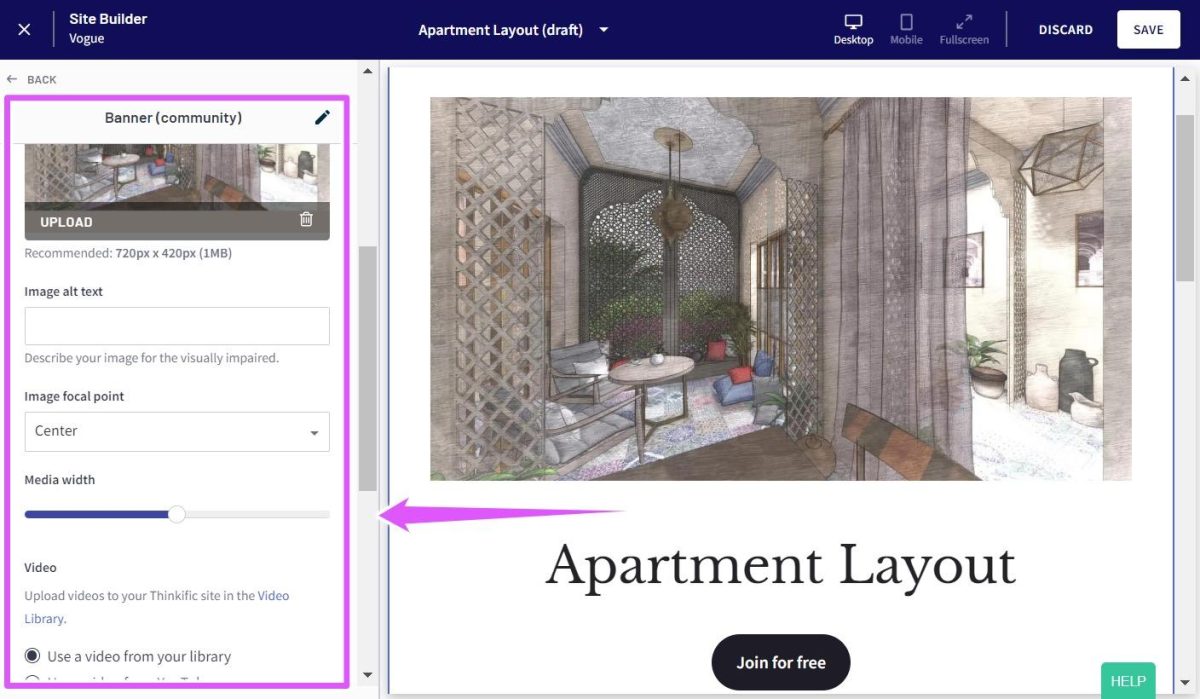
Although it provides some interactive site design additions, the overall customer experience feels less professional compared to Kajabi.
Winner: Kajabi’s built-in marketing tools will allow you to easily grow your business while focusing on product creation. Thinkific is a better option for creators who need specialized third-party tools, but it’ll be more complicated to manage all those tools at once.
Kajabi vs Thinkific: Pros & Cons
 | |
|---|---|
| Kajabi Pros | Kajabi Cons |
| ✅ All-in-one business hub | ❌ Limited number of members and admins |
| ✅ Built-in marketing features: Advanced funnels and email marketing | ❌ Limited number of products per plan |
| ✅ Advanced course website builder | ❌ Forum-like community |
| ✅ Templates for courses, website, and funnels | ❌Fewer Integrations |
| ✅ Better support for all plans | |
| ✅ Mobile app | |
 | |
|---|---|
| Thinkific Pros | Thinkific Cons |
| ✅ Affordable plans | ❌ Limited support for lower pricing tiers |
| ✅ Better course creation | ❌ Limited website features |
| ✅ Intuitive interface | ❌ Limited templates |
| ✅ More integrations | ❌ No broadcast email marketing or funnels |
| ✅ Unlimited courses on every plan | ❌ Basic caps you at 10,000 students |
| ✅ Zero platform fees on sales | |
Final Verdict: Kajabi vs Thinkific
Kajabi brings all online business tools under one roof, while Thinkific excels in course creation.
| Kajabi | Thinkific |
|---|---|
| Best for:
Managing every aspect of an online business; products, websites, email lists, and marketing. | Best for:
Creating engaging online courses with a simple community and integration with third-party tools. |
So, which one in the showdown of Thinkific vs Kajabi is the best online course platform?
All in all, both Kajabi and Thinkific strive for simplicity but they take different approaches. Kajabi streamlines the flow between multiple tools, while Thinkific excels with its intuitive interface and numerous integrations.
Use Kajabi if:
- You need a mobile app for your courses.
- You want to offer more product types, like podcasts and coaching.
- You want to run all aspects of your online business on a single platform.
Click here to get started with Kajabi!
Use Thinkific if:
- You want a very intuitive course creation interface.
- You’re fine with using third-party integrations for business tools like marketing.
- You’re starting out with your first course and need an affordable course-building tool.
Click here to get started with Thinkific!
Note: For more alternatives check out our lists of Thinkific Alternatives and Kajabi Alternatives!