


EzyCourse positions itself as the budget challenger in the all-in-one creator platform space, promising to replace Kajabi, Teachable, Thinkific, and several other tools with a single subscription. A bootstrapped team from Bangladesh (incorporated in Atlanta) packs courses, coaching, communities, memberships, email marketing, and white-label mobile apps into plans starting at $55/month. That’s an ambitious scope for the price.
To write this EzyCourse review, we analyzed the platform extensively. We believe it’s the right choice if:
- You want broad features at the lowest possible price
- You need white-label mobile apps without paying a separate premium
- You’re a solo creator consolidating multiple subscriptions into one tool
- Zero transaction fees matter more to you than platform maturity
- You value responsive human support and community-driven development
However, EzyCourse might not be the best choice if:
- You need reliable email marketing and automation
- Professional design quality out of the box matters to your brand
- You want a platform with a track record of creator success at scale
- You need AI that functions as a business partner, not just a page generator
- Stability and polish matter more to you than feature count
In this case, consider Kajabi: a platform built for experts who want to turn knowledge into a business. With over $10 billion earned by creators on the platform, an AI business partner (Cofounder) that knows your account and advises on strategy, and a product ecosystem refined over 15 years, Kajabi trades breadth for depth where it counts.
⭐ We’ve included a detailed look at Kajabi at the end of this EzyCourse review as the best alternative for creators who prioritize a professional, proven platform over raw feature count. If you’re ready to explore Kajabi, you can start your 30-day free trial here.
What is EzyCourse?
EzyCourse is an all-in-one online business platform for creators, educators, and entrepreneurs who want to run their knowledge business from a single dashboard. Founded by Md Sadek Hossain, a self-taught developer from Sylhet, Bangladesh, the platform began development in 2020 after Hossain tested Thinkific, Kajabi, and WordPress-based solutions and found them either too limited, too complex, or too expensive.
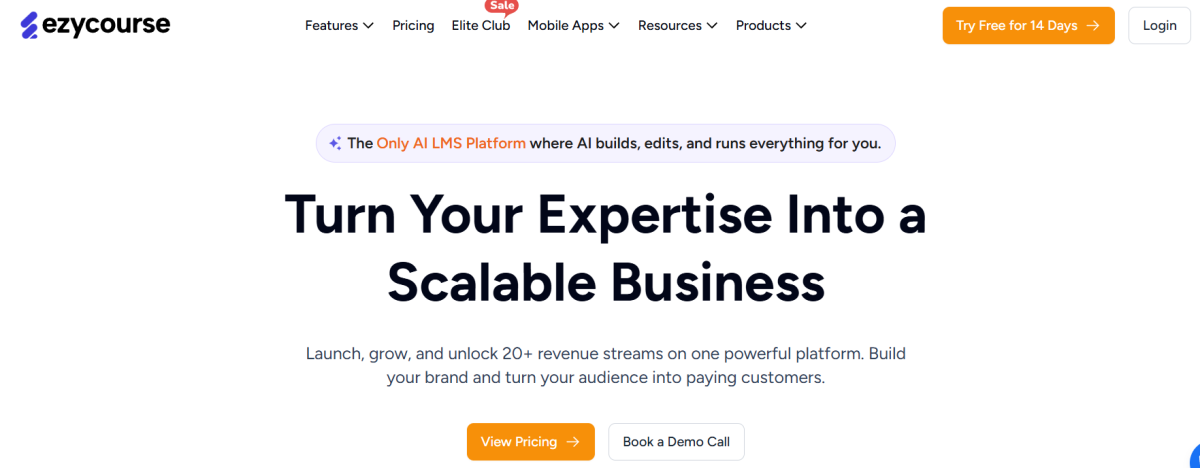
Today, EzyCourse calls itself “The Only AI LMS Platform where AI builds, edits, and runs everything for you”, claiming to offer 20+ revenue streams on one platform. The feature list covers courses, coaching (1:1 and group), communities, memberships, email marketing, appointment booking, affiliate programs, digital and physical product sales, and white-label mobile apps.
The company is privately held and bootstrapped, with trailing twelve-month revenue of approximately $1.5 million and over 1,800 active creators generating more than $13 million in cumulative revenue. The engineering team of 11–50 employees works primarily from Sylhet, with the LLC registered in Atlanta, Georgia.
EzyCourse Pros & Cons
|
Pros |
Cons |
|---|---|
|
✅ Strong value-per-dollar pricing ($55/month annual) |
❌ Email marketing tools are immature |
|
✅ White-label mobile apps included on Unlimited plan |
❌ Page builder has reliability and autosave issues |
|
✅ 0% transaction fees on all plans |
❌ Reporting and analytics are underpowered |
|
✅ Broad feature set covering 20+ product types |
❌ Community features lack polish vs. dedicated tools |
|
✅ 24/7 responsive customer support |
❌ Learning curve from feature density |
|
✅ Public roadmap with fast iteration |
❌ Small team and limited track record at scale |
|
✅ SCORM 1.2/2004 support |
❌ Some advanced features require paid add-ons |
EzyCourse Review: How it Works & Key Features
Courses & Learning: EzyCourse offers a course builder with 13+ lesson types, drip content, and completion tracking.
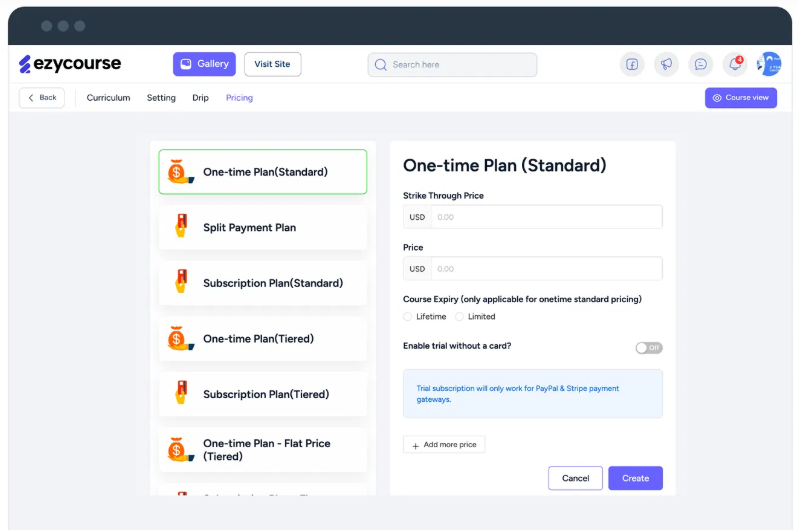
The course system is EzyCourse’s core product. Courses are organized into chapters and lessons, with 13+ lesson types including video, quiz, assignment, download, live, and embeddable custom pages. Nine pricing options are available for each course, from one-time purchases to subscriptions, split payments, and tiered B2B pricing.
Source: EzyCourse
Drip content works at the individual lesson level in two modes: days after enrollment or a specific scheduled date. This accommodates both cohort-style programs (everyone unlocks content on the same date) and self-paced courses (content releases relative to each student’s enrollment date).
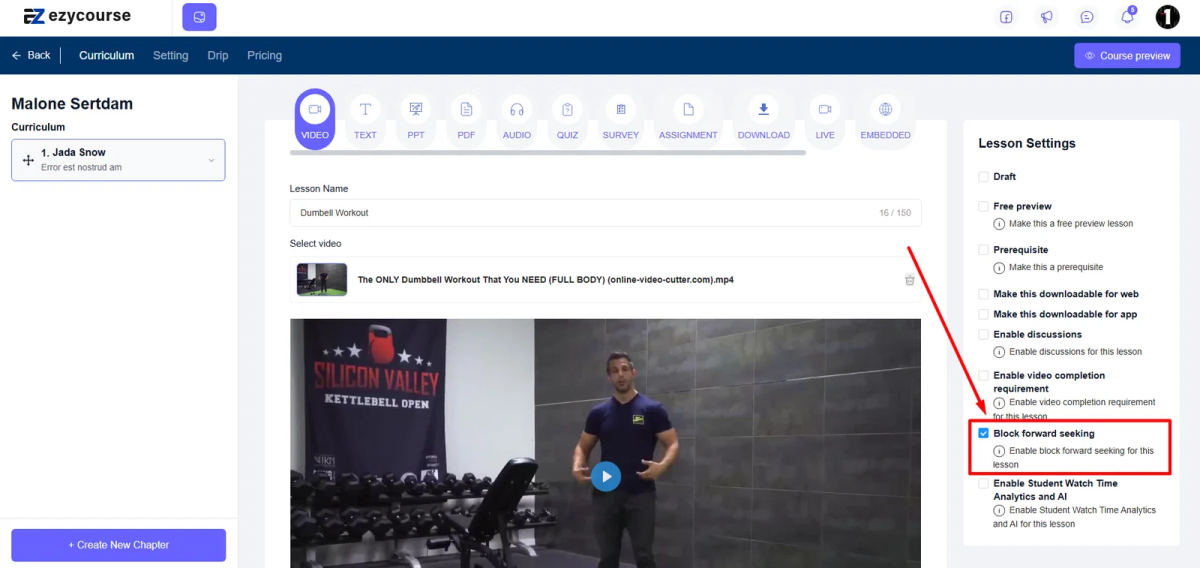
The quiz engine supports per-question point assignment with percentage-based or raw-score passing criteria. Instructors review all student submissions from the admin panel. A Block Forward Seeking setting prevents students from skipping through video content on first viewing, then lifts for subsequent views.
Source: EzyCourse
Completion tracking connects to the platform’s automation system. With the Internal Task Automation add-on, chapter and lesson completion events can trigger emails, tag assignments, if-else logic branches, or webhooks. Certificates include a completion time display recording how long a student spent from first content view to final lesson, useful for CPD-required courses.
Analytics come through the Student Watch Time Analytics add-on, covering per-lesson completion rates, page active time, individual student drill-down, and CSV export.
Coaching & Appointment Booking: EzyCourse combines 1:1 coaching, group coaching, scheduling, and live meetings in one system.
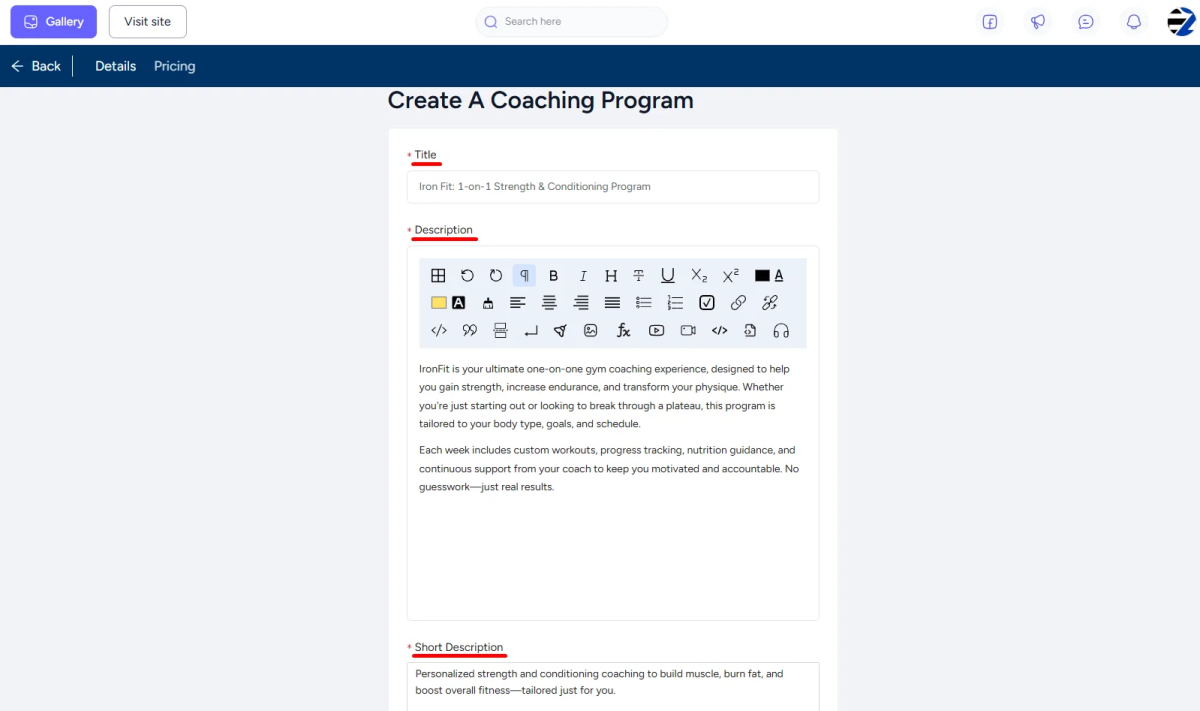
The coaching system pairs structured client programs with built-in scheduling. Coaches create programs in three session structures: week-based (up to 550 days), session-based, or continuous. Toggling the “One to One” option switches between individual and group delivery.
Source: EzyCourse
In 1:1 mode, each student gets a dedicated coaching feed with thread-based communication supporting rich text, documents, voice notes, audio messages, video messages, and files. In group coaching, coaches assign tasks and materials to all enrolled clients at once.
Appointment booking integrates directly with coaching programs. Coaches link an existing appointment to a program, and all pricing, duration, and availability rules carry over automatically. A credit-based system gives students a set number of free session bookings with configurable renewal cycles (weekly, monthly, yearly, or one-time).
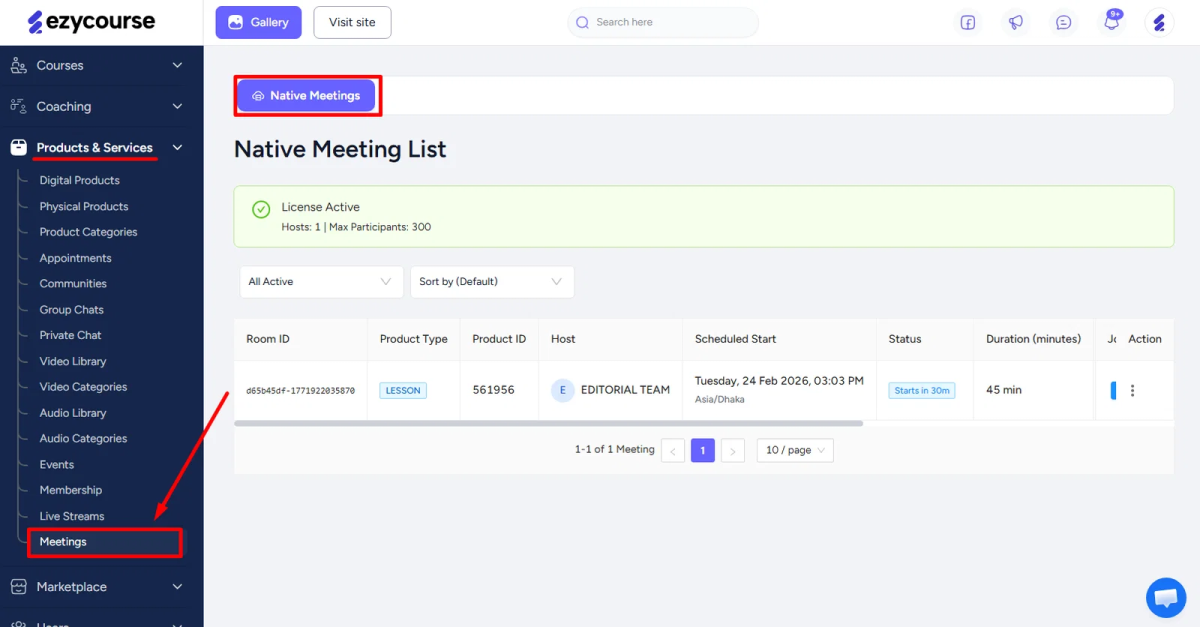
Live sessions use either EzyCourse’s native meeting system (up to 300 attendees with screen share, Q&A, and recording) or Zoom. Coaches can block specific time slots without changing their general availability and set minimum advance booking cutoffs.
Source: EzyCourse
Plan limits scale with pricing: the Essential plan allows 1 coaching program with 20 active clients, Pro allows 5 programs with 500 clients, and Unlimited removes both caps.
Communities & Commerce: EzyCourse provides a branded community feed, multi-product cart checkout, and B2B tiered pricing.
The community feature provides a Facebook-like feed on the creator’s branded site. Communities contain multiple topic-based channels, each configurable as free, premium, or locked. Posts can be pinned, hidden, scheduled, and posted anonymously. Group and private chat add a Messenger-style layer for direct communication alongside the public feed.
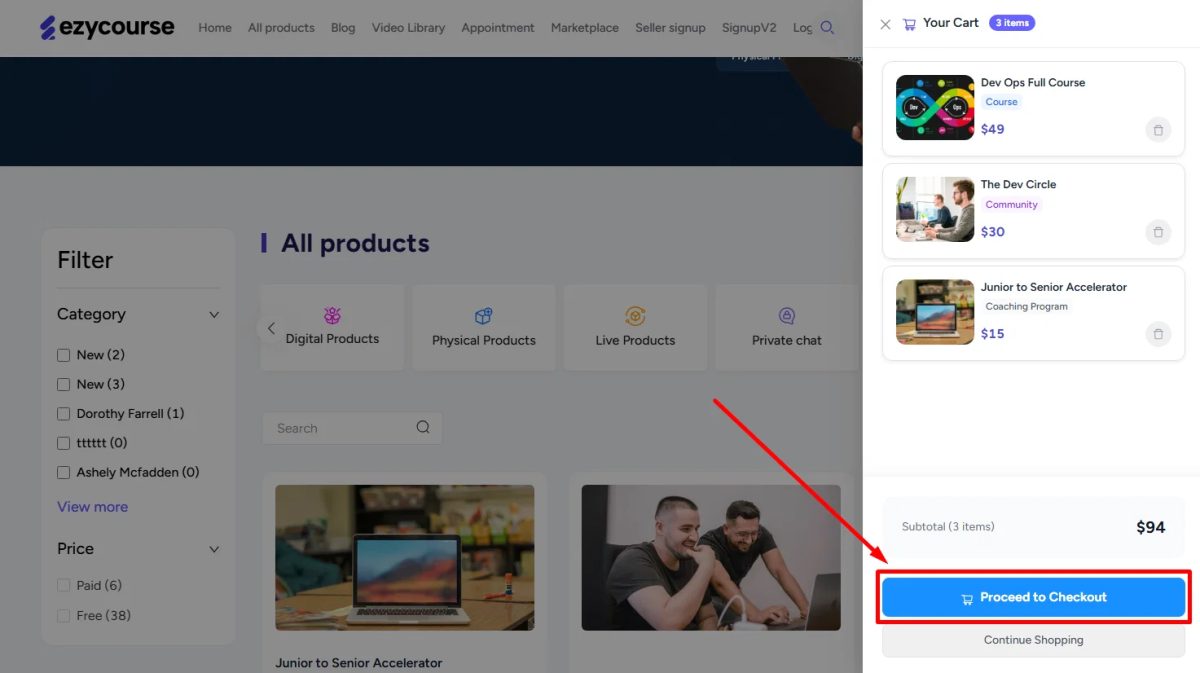
On the commerce side, a Cart Checkout system lets customers add courses, coaching programs, communities, digital products, and physical products to a persistent cart and complete a single transaction. Tiered Pricing enables B2B bulk seat sales with up to 20 tiers per pricing plan, where organization managers can buy seats, enroll team members, and track progress without admin involvement.
Source: EzyCourse
Smart Upsell surfaces product recommendations during checkout, and course gifting lets buyers purchase any course for another email address from the checkout page. User-specific coupons prevent code sharing by tying a coupon to a single student account.
Email Marketing: EzyCourse includes a built-in email system with behavioral segmentation, though it remains a work in progress.
The email system covers broadcast campaigns and trigger-based automation workflows. Campaigns follow a four-step creation flow (Details, Recipients, Template, Schedule) with three audience targeting modes: behavioral targeting based on purchases, tags, login activity, quiz submissions, and membership status; form contact targeting; and retargeting based on prior campaign behavior (opens, clicks).
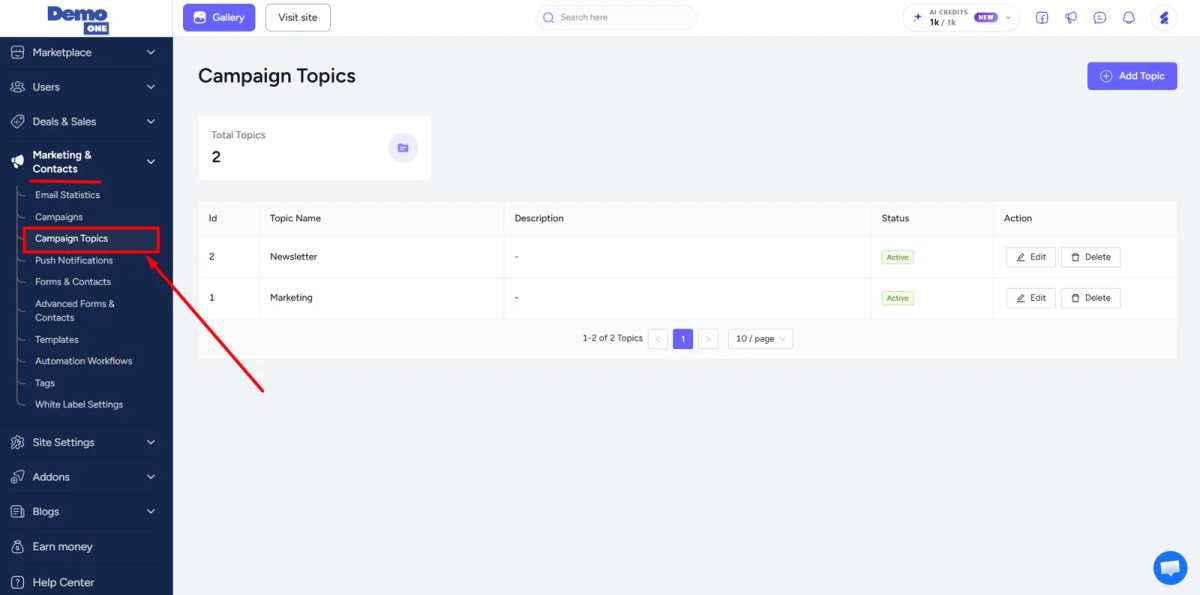
Conditions combine with AND/OR logic within and between segments. Email delivery for the Advanced Campaign builder runs on AWS SES under the creator’s own verified domain, avoiding shared-IP deliverability risks. Campaign Topics allow subscribers to opt out of specific categories rather than unsubscribing entirely.
Source: EzyCourse
Plan-tiered email volume ranges from 10,000/month on Essential to 500,000/month on Elite.
That said, the email module has known gaps. The public roadmap shows multiple in-progress items: inability to see which email was sent in a campaign, inability to exclude contacts from a send, inability to edit a scheduled campaign, and missing percentage-based metrics. Creators needing sophisticated email automation should weigh this carefully.
Website Builder & AI Builder: EzyCourse offers both a manual drag-and-drop builder and an AI-powered page generator.
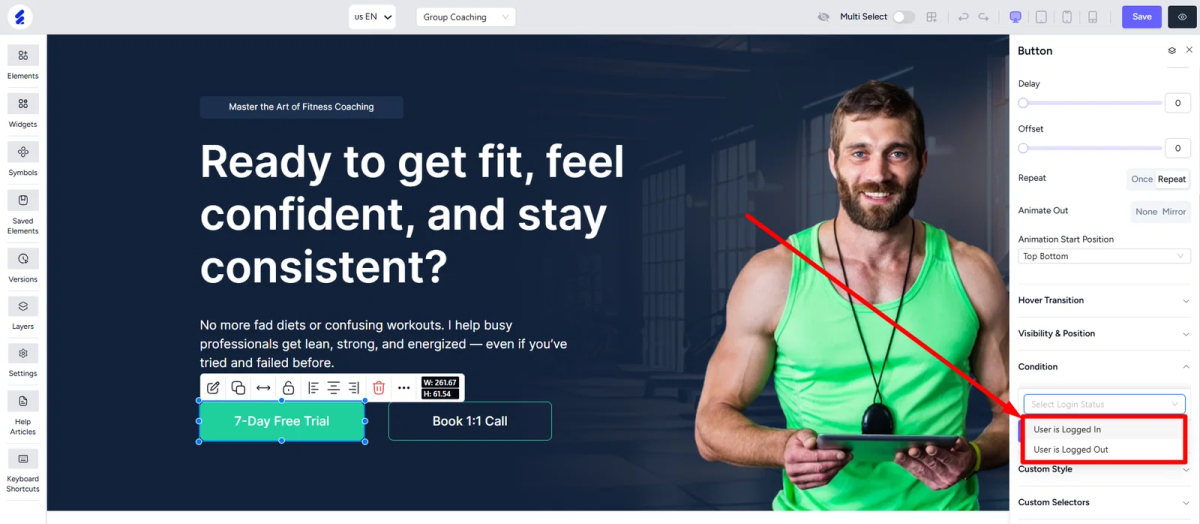
Two tools handle site creation. Builder 2.0 is a drag-and-drop editor with grid-based layouts, widgets, sliders, countdowns, and forms. Pages support draft mode, background video, and conditional rendering that shows different content to logged-in versus logged-out visitors.
Source: EzyCourse
The AI Website Builder generates pages from text prompts. Creators select a page type (funnels, education, marketing, community, etc.), enter their niche and brand details, and the AI produces editable sections inside Builder 2.0. A built-in code editor supports HTML, CSS, and JavaScript editing with split-view preview.
EzyCourse provides 10+ niche-specific templates and 100+ pre-built content blocks. Default pages cover Home, All Products, Membership, Appointment, Video Library, Blog, About Us, and Contact Us.
Where EzyCourse Falls Short
EzyCourse delivers broad coverage at its price point, but several limitations reflect its stage of development. These aren’t failures. They’re natural consequences of a young platform trying to cover a large surface area with a small team.
Email Marketing Immaturity: The email module exists but lacks the sophistication creators need for serious list management. The Canny roadmap reveals gaps still in progress: no ability to exclude contacts from a campaign send, no ability to edit a scheduled campaign, and missing engagement metrics in the dashboard. Creators migrating from ConvertKit or ActiveCampaign will find the transition challenging.
Reporting and Analytics Gaps: A “VERY URGENT: Proper Sales Reporting” request sits in the planned queue with 24 votes, alongside requests for billing cycle data (18 votes). For creators managing subscription businesses, the financial reporting is insufficient for operational decisions. Understanding which products drive revenue, where churn happens, and how funnels perform requires workarounds.
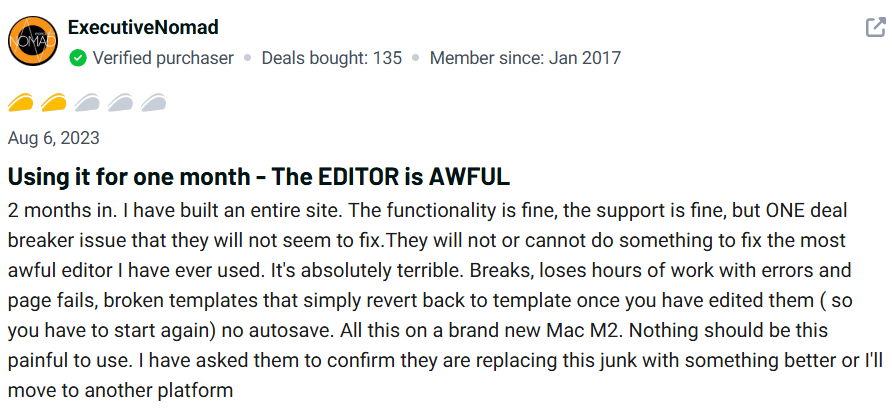
Page Builder Reliability: AppSumo reviewers report that the page editor can break and lose work, with no autosave and templates that revert after editing. For a tool where the website is the storefront, this creates real risk during launches and updates.
Source: AppSumo
Community Feature Depth: Despite positioning itself as a Mighty Networks replacement, the community module has documented UX gaps: no rich-text formatting on posts, no feed sorting, no member post history view, and no per-instructor community assignment, according to the planned feature queue. The module functions but lacks the polish of dedicated community platforms.
Add-on Cost Complexity: While EzyCourse markets “No Hidden Costs,” many features bundled into higher plans must be purchased separately on lower tiers. The add-on marketplace includes DRM ($84/month), AI Subtitles ($76/month), Advanced Analytics ($15/month), and Private Chat ($38/month). A creator on the Essential plan who needs these capabilities faces add-on costs that erode the price advantage.
Scale and Track Record: With $13 million in cumulative creator revenue across 1,800 active creators, EzyCourse has yet to prove itself as a platform where large creator businesses thrive. The small team (11–50 employees) and bootstrapped resources raise legitimate questions about long-term stability for creators building their livelihood on it.
Top EzyCourse Alternative: Kajabi
Kajabi addresses EzyCourse’s maturity gaps with a platform refined over 15 years and backed by $550 million in growth financing. Where EzyCourse optimizes for feature count at a low price, Kajabi optimizes for features that work reliably, look professional, and produce business outcomes. The numbers tell the story: over 100,000 businesses built and $10 billion earned by creators on the platform.
⭐ If you’ve been thinking about starting your online business, this is your sign. Get 30 days of Kajabi free instead of the usual 14 days when you use this special link — no pressure, no rush, just more time to grow.
Proven Creator Success: Kajabi has a documented track record of producing high-earning creator businesses.
The difference between having features and having features that produce results separates mature platforms from newer entrants. Kajabi’s $10 billion in cumulative creator earnings across 100,000+ businesses represents a different scale of proven outcomes than EzyCourse’s $13 million across 1,800 creators.
This isn’t just a size difference. It reflects years of refinement in conversion optimization, checkout flows, email deliverability, and the dozens of small details that determine whether a creator’s business grows. The platform includes zero transaction fees on all paid plans, native affiliate programs with automated PayPal payouts, and checkout features like Apple Pay, Google Pay, Afterpay, and Klarna that reduce friction for buyers.
Justin Welsh built a $10M+ business on Kajabi, describing it as having “all that stuff under one roof, which was a blessing for my business.” (Kajabi Product Page)
Cofounder AI: Kajabi’s AI functions as a business partner, not just a content generator.
EzyCourse’s AI builder generates website pages from prompts. Kajabi’s Cofounder does something different: it acts as a business advisor that reads your account data (products, pricing, revenue, audience details) and provides guidance grounded in your actual business state.
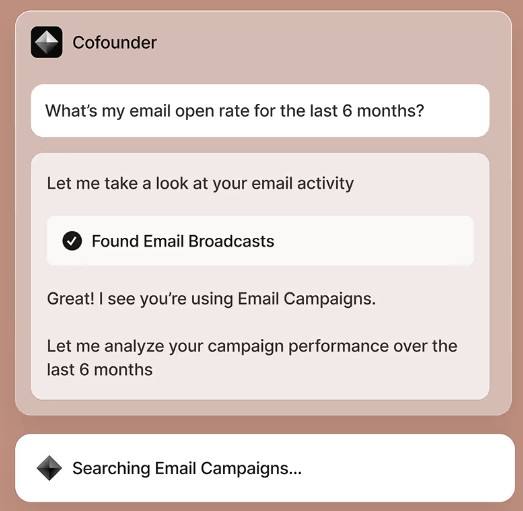
Cofounder interviews creators to extract their expertise, surfaces viable product ideas, recommends pricing based on market context, and generates copy calibrated to expert businesses. It’s the difference between “here’s a page layout” and “based on your audience of 5,000 contacts and your existing course performance, here’s what you should build next and how to price it.”
Cofounder is included with every Kajabi plan at no additional cost. For creators who would otherwise hire a business coach to help them structure offers and write sales copy, this consolidates real value.
Professional Marketing & Automation: Kajabi’s email and funnel system is built for serious business operations.
Where EzyCourse’s email system is still building basic campaign management features, Kajabi offers a mature marketing engine with A/B testing on broadcasts, resend-to-unopened automation, Liquid personalization, countdown timers in email, custom sending domains, and automations with conditional branching.
The Funnels system sequences landing pages, emails, automations, and offers into guided paths, with pre-built templates covering lead magnets, webinar registration, and product sales. Wait nodes and trigger flows with branches enable multi-step sequences that respond to buyer behavior.
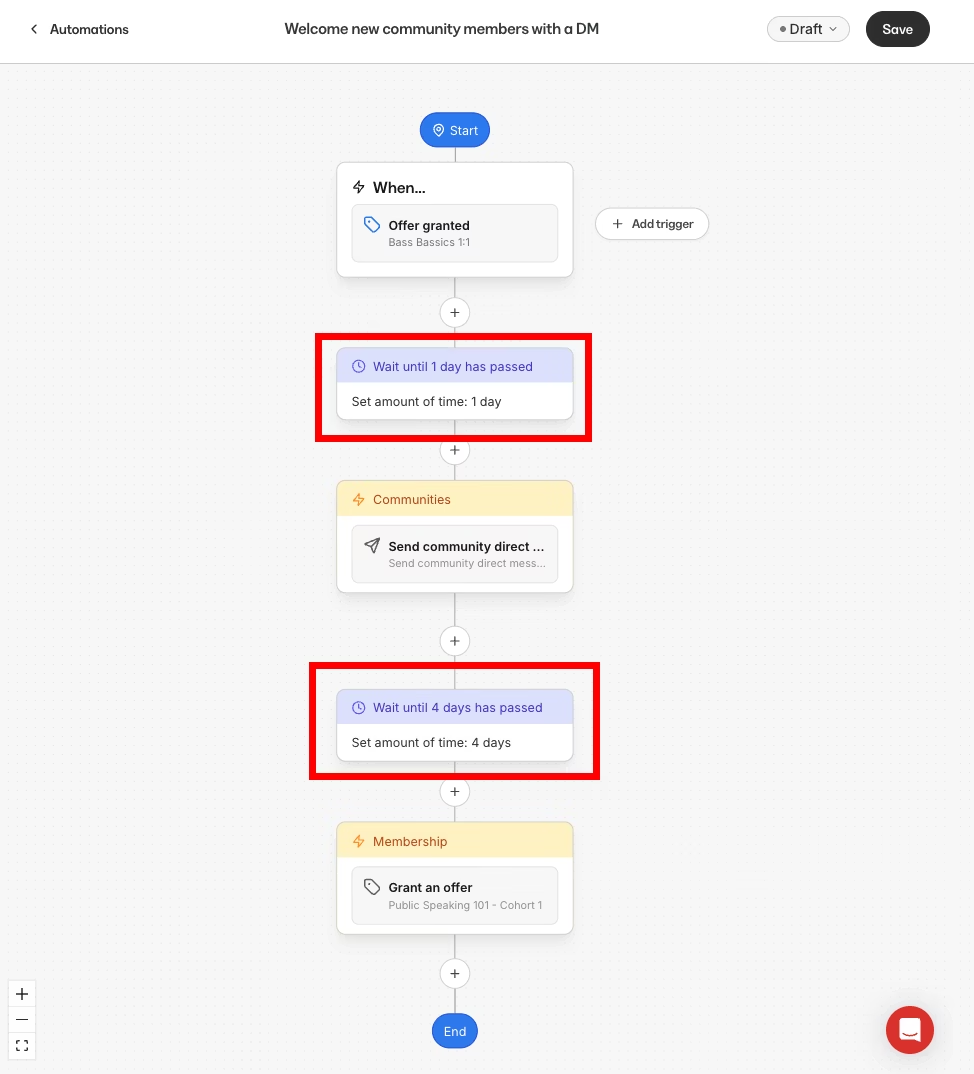
Because products, checkout, email, and automations share the same data layer, an automation triggered by a course lesson completion can immediately enroll a contact in a new sequence, apply a tag, and grant access to an upsell offer, all without API calls or Zapier connections.
Community & Coaching Depth: Kajabi’s community and coaching tools reflect years of iteration.
Kajabi’s Community product includes unlimited Access Groups on all plans, Live Rooms with breakout groups and recording, Challenges with gamification, customizable point systems with badges and prizes, polls, scheduled posts, direct messaging, and moderation tools.
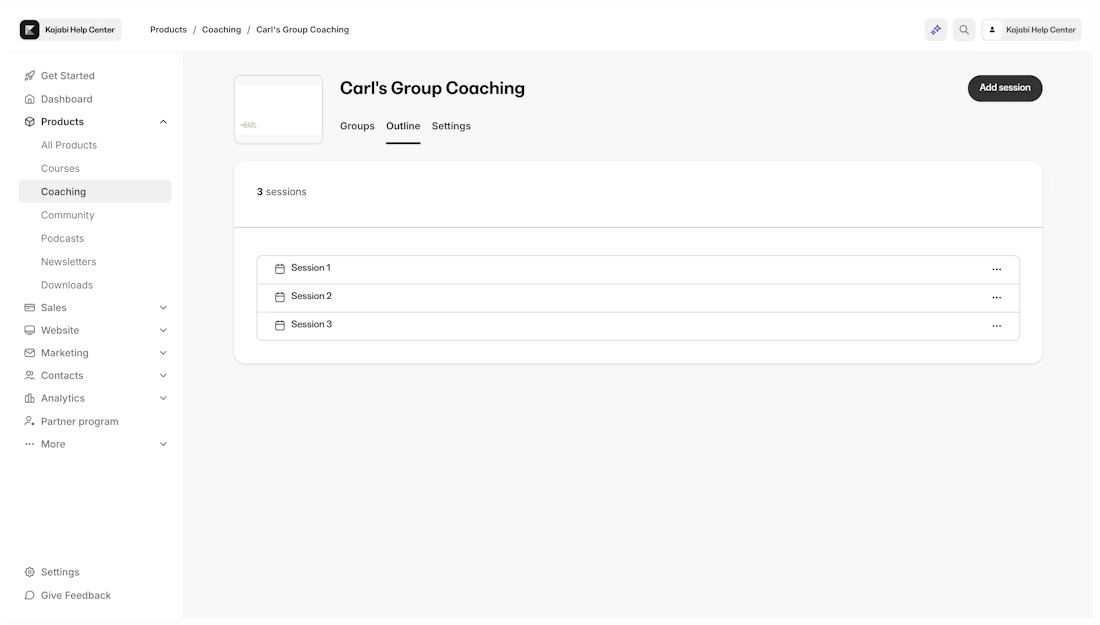
The Coaching product uses Kajabi’s native Scheduler with Google Calendar, Outlook, and Office 365 sync. Built-in live video supports breakout sessions, and recordings auto-upload to the client’s session page. The coaching product sits alongside courses, communities, and downloads in the same account, accessible from a single member portal.
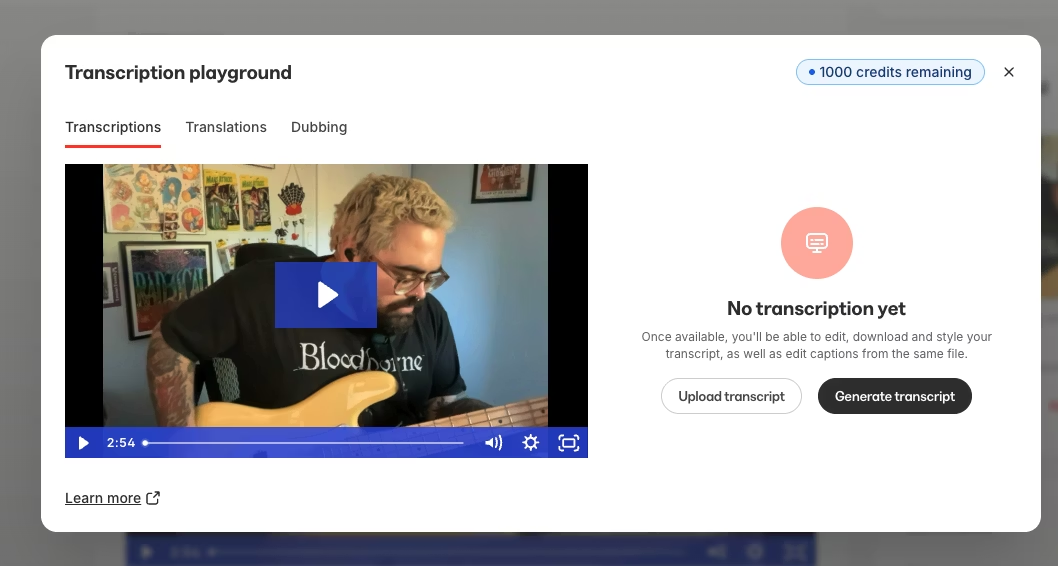
Multilingual Content at Scale: Kajabi enables global reach through AI-powered dubbing and translation.
Kajabi includes transcriptions, translations, and dubbed voiceovers in 70+ languages as a built-in feature (Growth and Pro plans). This lets creators repurpose a single course for global audiences without re-recording content. EzyCourse offers an AI Subtitle Generator as a paid add-on ($76/month), but does not include voice dubbing.
EzyCourse or Kajabi: Comparison Summary
|
EzyCourse |
Kajabi | |
|---|---|---|
|
Target audience |
Budget-conscious solo creators |
Established experts building serious businesses |
|
Founded |
~2022 (commercial launch) |
2010 |
|
Creator earnings on platform |
$13M cumulative |
$10B+ cumulative |
|
Pricing (annual) |
$55–$279/month |
$143–$399/month |
|
Transaction fees |
0% |
0% |
|
Free trial |
14 days |
Free trial available |
|
Products included |
Courses, coaching, community, memberships, digital/physical products, video/audio libraries |
Courses, coaching, community, memberships, downloads, podcasts, newsletters |
|
AI capabilities |
AI page builder (generates layouts) |
Cofounder (business partner with account access) |
|
Email marketing |
Built-in but imma ture; key features still in development |
Mature system with A/B testing, automations, funnels, conditional branching |
|
White-label mobile app |
Included on Unlimited ($189/mo annual) |
Included on Pro ($399/mo annual) |
|
Reporting |
Basic; proper reporting still planned |
Revenue attribution, funnel analytics, contact lifecycle |
|
Page builder |
Functional but reported reliability issues |
Stable visual builder with global style settings |
|
Community |
Facebook-like feed with channels |
Channels, Live Rooms, gamification, challenges, direct messaging |
|
Coaching |
1:1 and group with credit-based booking |
1:1 and group with native scheduler, live video, and breakout rooms |
|
Integrations |
Zapier, Pabbly, webhooks (Pro+) |
Zapier, webhooks, public REST API (Pro), Kajabi Payments ecosystem |
|
Support |
24/7 human support; responsive |
24/7 support with AI triage and human escalation |
|
SCORM support |
Yes (via add-on) |
No |
|
B2B/team pricing |
Tiered pricing with seat management |
Not a primary focus |
Final Verdict
The choice between EzyCourse and Kajabi depends on where you are in your creator journey and what you value most.
Choose EzyCourse if you want broad features for less money and can work around rough edges. It fits budget-conscious creators who want courses, coaching, community, memberships, and a mobile app on a single invoice without the premium price tag. For creators whose needs align with what EzyCourse does well (course delivery, appointment booking, B2B seat pricing), it represents genuine value. Go in knowing that email marketing, reporting, and the page builder are still maturing.
Get started with EzyCourse here.
Choose Kajabi if you’re building a business, not just hosting content. Kajabi is for creators who have validated their expertise and want a platform that produces professional outcomes: polished checkout flows, mature email marketing, proven funnels, and an AI business partner that helps you make strategic decisions. The higher price reflects 15 years of refinement and a track record of $10B+ in creator earnings. For experts who view their platform as business infrastructure rather than a monthly expense, Kajabi delivers the reliability and depth that growing businesses require.
Launch your online business today with a 30-day free trial with Kajabi.
The trade-off is clear: EzyCourse gives you more features for less money, while Kajabi gives you fewer features that work more reliably and produce more proven results. Which matters more depends on your stage and priorities.
EzyCourse FAQ
Is there a free version of EzyCourse?
No. EzyCourse provides a 14-day free trial with no credit card required, plus a 30-day money-back guarantee on paid plans. Paid subscriptions start at $97/month (or $55/month billed annually) for the Essential plan. Kajabi similarly offers a free trial without a permanent free tier, with paid plans starting at $143/month billed annually.
How much does EzyCourse cost?
EzyCourse offers four plans on annual billing: Essential at $55/month, Pro at $129/month, Unlimited at $189/month, and Elite at $279/month. Monthly billing costs 35–60% more. Features on lower plans sometimes require paid add-ons, including DRM ($84/month), AI Subtitles ($76/month), and Advanced Analytics ($15/month). Kajabi’s plans range from $143/month to $399/month annually, with all core features included per tier and no add-on marketplace.
Does EzyCourse include white-label mobile apps?
Yes, but only on higher tiers. The Essential and Pro plans include only the shared EzyCourse app. White-label Android and iOS apps are included starting with the Unlimited plan ($189/month annually). The white-label app can also be purchased as a standalone add-on for $149/month or $2,590 as a lifetime purchase. Kajabi includes its branded mobile app on the Pro plan ($399/month annually).
What are EzyCourse’s biggest limitations?
The most cited issues are immature email marketing (missing features like campaign exclusions and post-schedule editing), underpowered reporting, a page builder with known reliability problems and no autosave, and community features that lack the depth of dedicated platforms. Many of these are being addressed on the public roadmap, but creators with immediate needs in these areas may find the current state insufficient.
Does EzyCourse charge transaction fees?
No. EzyCourse charges zero platform transaction fees on all plans. Creators keep 100% of their sales revenue beyond standard payment processor fees from Stripe, PayPal, or other connected gateways. Kajabi also charges zero transaction fees on all paid plans, with payment processing handled through Kajabi Payments (powered by Stripe) or directly connected Stripe/PayPal accounts.
Can EzyCourse handle B2B or team-based sales?
Yes. EzyCourse’s tiered pricing system supports up to 20 tiers per pricing plan and includes a self-service seat management dashboard where organization managers can buy seats, enroll team members, view progress, and issue certificates without creator involvement. This is a notable strength for creators selling to corporate clients or training organizations.
How does EzyCourse’s AI compare to other platforms?
EzyCourse’s AI focuses on website and page generation. The AI Builder creates site pages from text prompts, selecting niche-appropriate layouts and generating editable sections. Kajabi’s AI (Cofounder) takes a different approach: it reads the creator’s actual account data (products, pricing, revenue) and functions as a business partner that recommends offers, suggests pricing, and generates copy based on the creator’s specific context.
Is EzyCourse suitable for creators migrating from other platforms?
Yes. EzyCourse offers free migration assistance on paid plans and supports importing content from competing tools. However, creators with complex automation workflows or large email lists should evaluate whether EzyCourse’s current email and automation capabilities can replicate their existing setup before committing to a migration.