


If you’ve navigated Circle’s tiered pricing, trying to figure out whether the $89/month Professional plan gives you enough or if you need the $199/month Business plan for workflows, while calculating the 2% transaction fee on every dollar your community generates, you know that platform pricing can feel like discovering hidden costs after you’ve already committed.
Circle has become one of the most complete community platforms available, powering 20,000+ businesses and facilitating $120M in creator revenue since its 2020 launch. The platform combines discussions, courses, events, live streaming, email marketing, AI agents, and a website builder under one roof. But as Circle has expanded from a focused community tool into a full business platform, its pricing has layered on transaction fees, paid add-ons, and feature gates that can make the true monthly cost much higher than the advertised plan price.
We’ve analyzed Circle’s pricing tiers, transaction fees, and add-on costs. We believe it’s the right choice if:
- You’re building a community-first business where member interaction is the core value
- You want space-level access controls for tiered memberships
- You need AI agents trained on your community content for 24/7 member support
- Your business benefits from unlimited members without per-seat pricing
- You value a clean interface with fast product development cycles
However, Circle’s pricing is not a good choice if:
- You need zero transaction fees on the revenue you generate
- Your business centers on structured courses, coaching programs, and digital products rather than community discussions
- You want all marketing and email tools included without paid add-ons
- You need native coaching with scheduling, live video, and client management
- You prefer predictable costs without variable fees tied to your revenue
In this case, you should consider Kajabi: the all-in-one platform that charges zero transaction fees on any plan, includes native coaching tools, email marketing, and sales automation without add-on costs, and replaces the need to stitch together multiple subscriptions to run a complete digital business.
We’ve included a detailed pricing comparison with Kajabi in this review, as the best choice for creators whose business extends beyond community into structured products and marketing. If you’re eager to jump into the Kajabi pricing breakdown, go ahead and do so with this link.
Circle.so Pricing Summary
|
Circle |
Kajabi | |
|---|---|---|
|
Free Trial |
• 14-day free trial • No credit card required • Full feature access |
• Free trial available • 30-day money-back guarantee • Full feature access |
|
Entry Plan |
• Professional: $89/mo • Unlimited members • 20 spaces • 2% transaction fee |
• Basic: $143/mo (annual) • 5 products, 2,500 contacts • 0% transaction fee • Email + automations included |
|
Mid-Tier |
• Business: $199/mo • Workflows + automations • 30 spaces • 1% transaction fee |
• Growth: $199/mo (annual) • 50 products, 25,000 contacts • 0% transaction fee • Advanced automations |
|
High-Tier |
• Circle Plus: Custom • AI Agents, custom SSO • 0.5% transaction fee • Branded mobile app |
• Pro: $399/mo (annual) • Unlimited products, 100,000 contacts • Branded mobile app included • API access |
|
Best For |
Community-first builders who want unlimited members with discussion, event, and AI engagement tools |
Creator CEOs who need courses, coaching, email marketing, and sales funnels with zero transaction fees, all from one platform |
⭐ Create a more engaging online community with Circle using this special link. Bring together discussions, memberships, courses, and live events in one streamlined platform.
Circle.so Pricing: In-Depth Overview
Circle bills per community, not per member. Operators pay a fixed monthly rate regardless of how many people join. The platform differentiates tiers through three levers: feature access (workflows, AI, branding removal), space limits, and transaction fee rates. Beyond base subscriptions, Circle monetizes through transaction fees on all payments processed and a paid Email Hub add-on. Let’s examine each tier to understand the true cost of running a business on Circle.
Circle Professional Plan: $89/month
|
Feature |
Details |
|---|---|
|
Price |
$89/month |
|
Members |
Unlimited |
|
Spaces |
20 |
|
Transaction Fee |
2% on all revenue |
|
Key Features |
Courses, discussions, events, website builder, analytics, gamification |
|
Trial |
14 days free, no credit card |
The Professional plan is Circle’s entry tier for community builders. It includes unlimited members, removing the per-seat cost anxiety common on other platforms. You get courses, discussions, events, live streaming, a website builder, custom domain, gamification, and paid memberships. At $89/month, the base price is competitive.

Source: Circle
Two constraints shape the plan’s real cost. First, the 2% transaction fee means that for every $1,000 in community revenue, $20 goes to Circle (on top of Stripe’s processing fees). At $5,000/month in revenue, that’s $100/month extra. Second, the 20-space limit can feel tight for communities running multiple programs, cohorts, or membership tiers at once.
|
Professional Plan | |
|---|---|
|
Pros |
Cons |
|
✅ Unlimited members included |
❌ 2% transaction fee on all revenue |
|
✅ Courses, events, and website builder |
❌ Limited to 20 spaces |
|
✅ 14-day free trial, no card required |
❌ No workflows or automation |
|
✅ Custom domain and gamification |
❌ No AI Content Co-Pilot |
The Bottom Line 👉 Professional works for launching a paid community with moderate revenue, but the 2% fee and lack of automation mean growing operators will feel upgrade pressure quickly.
Circle Business Plan: $199/month
|
Feature |
Details |
|---|---|
|
Price |
$199/month |
|
Members |
Unlimited |
|
Spaces |
30 |
|
Transaction Fee |
1% on all revenue |
|
Key Additions |
Workflows, Admin API, branded email notifications, AI Co-Pilot, activity scores |
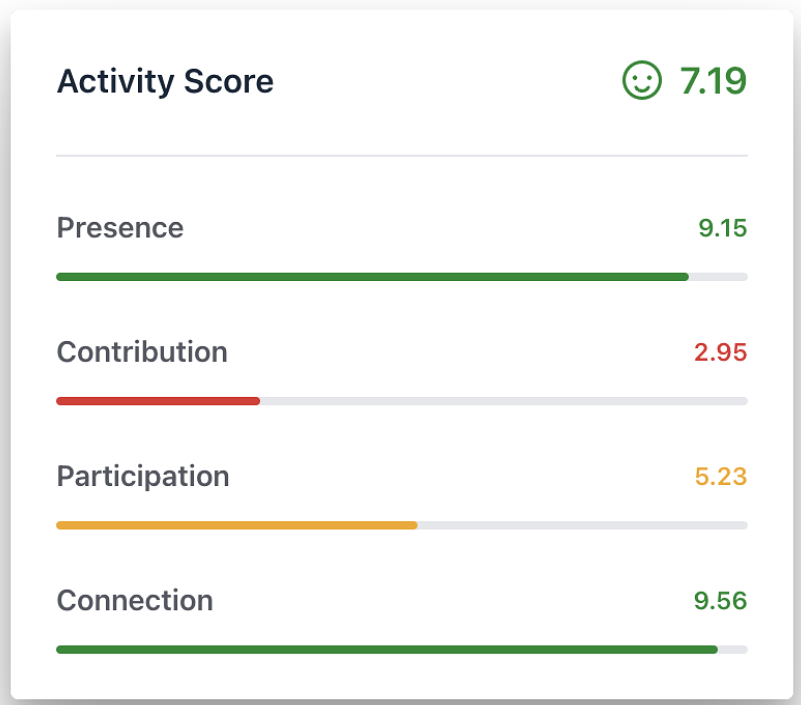
The Business plan unlocks Circle’s automation layer. Workflows let you build no-code automations triggered by member actions. The Admin API and Headless Member API enable custom integrations. Branded email notifications replace Circle’s default branding. Activity scores track member engagement over time. The transaction fee drops to 1%.
Source: Circle
The upgrade from Professional to Business is substantial: you gain automation, branding control, and developer tools. For communities generating real revenue, the fee reduction alone can justify the $110/month price difference. A community earning $11,000/month saves $110 from the 1% fee reduction, making the Business plan effectively free at that revenue level.
|
Business Plan | |
|---|---|
|
Pros |
Cons |
|
✅ Workflows and automation unlock |
❌ Still charges 1% transaction fee |
|
✅ Admin API for custom integrations |
❌ Limited to 30 spaces |
|
✅ Circle branding removal |
❌ No AI Agents |
|
✅ Activity scores for engagement tracking |
❌ Email Hub still costs extra |
The Bottom Line 👉 Business is the right tier for professional community operators who need automation and branding control, though the transaction fee and Email Hub add-on mean costs still scale with success.
Circle Plus: Custom Pricing
|
Feature |
Details |
|---|---|
|
Price |
Contact sales |
|
Members |
Unlimited |
|
Spaces |
Highest limits |
|
Transaction Fee |
0.5% on all revenue |
|
Key Additions |
AI Agents, custom SSO, branded mobile app, dedicated CSM, priority support |
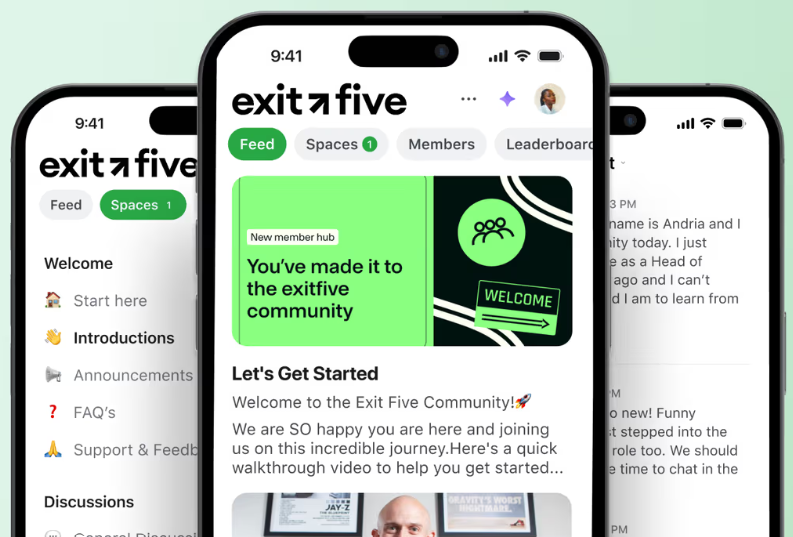
Circle Plus is the enterprise tier for high-volume operators. It adds AI Agents (up to 10 per community), custom SSO via SAML/OAuth, a branded mobile app published under your name in app stores, a sandbox community for testing, and a dedicated Customer Success Manager. The transaction fee drops to 0.5%, and 10,000 Email Hub contacts are included in the base price.
The branded mobile app matters. Exit Five reports 25%+ of members use the branded app daily, and a dedicated app creates a presence that generic platforms can’t match. Circle handles all app store submission and maintenance through their design studio team.
Source: Circle
|
Circle Plus | |
|---|---|
|
Pros |
Cons |
|
✅ AI Agents for 24/7 member support |
❌ Requires sales consultation |
|
✅ Branded mobile app included |
❌ Still charges 0.5% transaction fee |
|
✅ Custom SSO for enterprise needs |
❌ Custom pricing creates budget uncertainty |
|
✅ Dedicated CSM and priority support |
❌ Annual contracts typical |
The Bottom Line 👉 Circle Plus makes sense for established communities with real revenue who need enterprise features and the lowest transaction fee rate available.
Circle Add-On Costs and Hidden Fees
Beyond base subscriptions, Circle’s true monthly cost emerges through add-ons and variable fees:
Transaction Fees (on top of Stripe processing):
- Professional: 2% of all revenue processed
- Business: 1% of all revenue processed
- Circle Plus: 0.5% of all revenue processed
- These fees stack on top of Stripe’s standard card processing fees
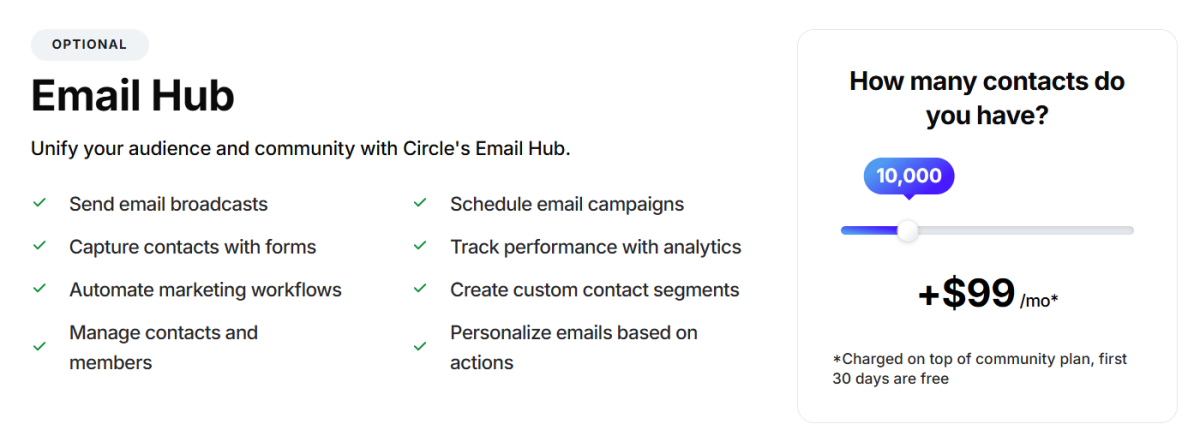
Email Hub Add-On:
- Free for under 100 contacts
- $99/month for up to 10,000 contacts (first 30 days free)
- Circle Plus includes 10,000 contacts in base price
- Scales with contact volume beyond 10,000
Branded Mobile App:
- Available only on Circle Plus (custom pricing)
- Not available as a standalone add-on for lower tiers
Real Cost Examples:
- A Professional plan community earning $5,000/month with 5,000 email contacts: $89 (plan) + $100 (2% fee) + $99 (Email Hub) = $288/month
- A Business plan community earning $10,000/month with 8,000 email contacts: $199 (plan) + $100 (1% fee) + $99 (Email Hub) = $398/month
Where Circle Falls Short
Circle excels as a community-first platform with modern design and fast development cycles. But its pricing structure and feature gaps create challenges for creators running full knowledge businesses:
Transaction Fees Penalize Revenue Growth
- Even the lowest tier (Circle Plus) charges 0.5% on every dollar processed
- A community generating $20,000/month pays $100 to $400 in platform fees depending on plan tier, on top of Stripe processing
- Platforms that include all business tools in one subscription charge zero transaction fees, making Circle progressively more expensive as revenue grows
Email Marketing Requires a Paid Add-On
- Email Hub costs $99/month for up to 10,000 contacts, added on top of the base subscription
- This turns email from an included feature into a significant additional expense
- Creators who need email marketing from day one face a higher effective starting price than advertised
Source: Circle
Key Automation Features Locked Behind $199/month
- Workflows, branded email notifications, and Circle branding removal all require the Business plan
- Creators on the $89 Professional plan must operate without automation or upgrade at a 124% price increase
- The gap between Professional and Business feels like a forced upgrade rather than a natural progression
Limited Native Course Assessment and Certification
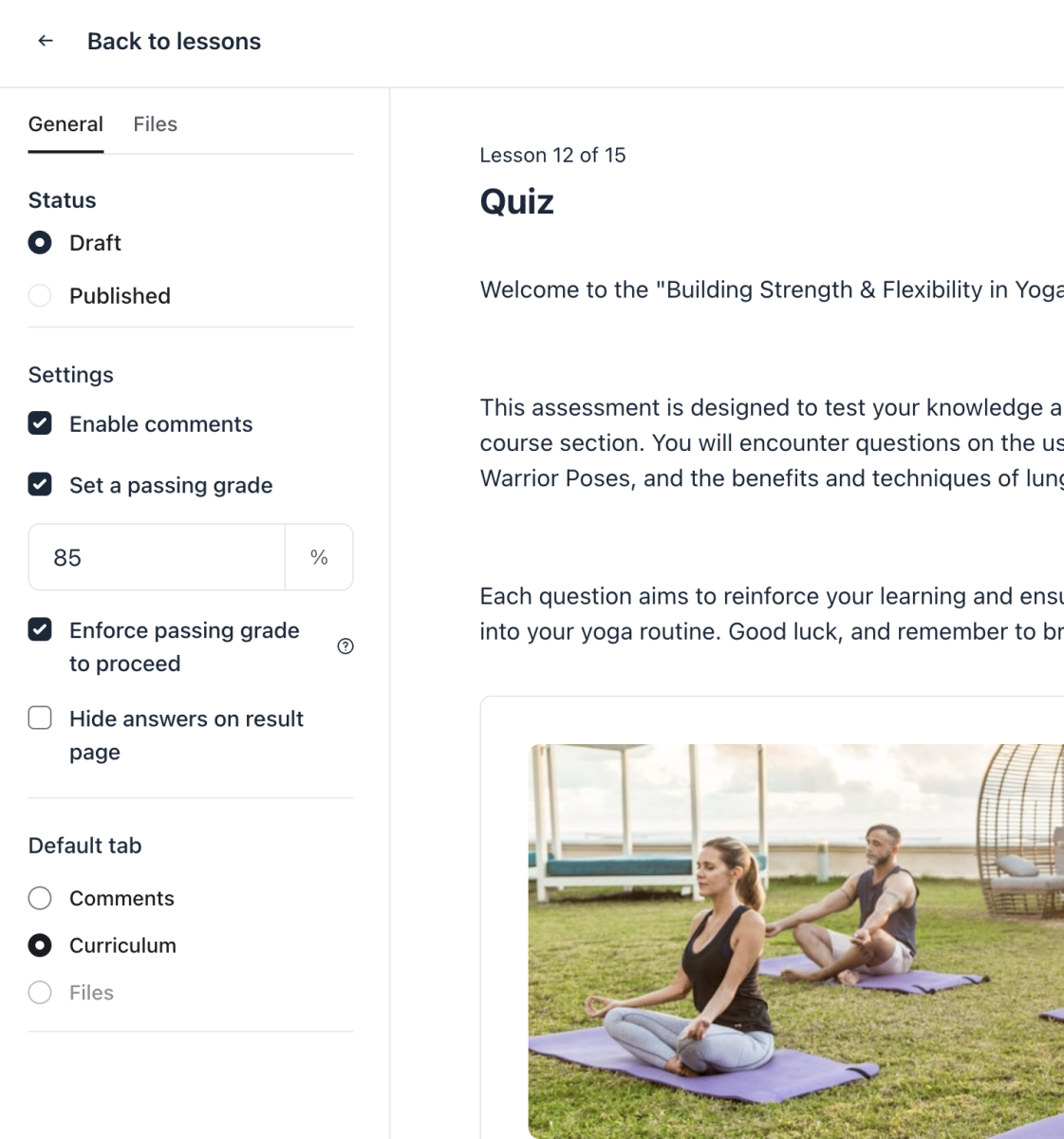
- Circle added quizzes in 2024, but its course tools remain simpler than dedicated course platforms
- No graded assignments, formal completion certificates at scale, or advanced assessment types
- Creators running structured educational programs may find the course features insufficient
Source: Circle
No Native Coaching Product
- Circle lacks built-in scheduling, 1:1 video sessions, and client management tools
- Coaches using Circle must integrate external scheduling (Calendly) and video (Zoom) tools
- This adds subscriptions and fragmentation for coaches who want a single platform
These limitations have led many knowledge entrepreneurs to explore platforms that include marketing, coaching, and sales tools without add-on costs or transaction fees…
Best Circle Alternative – Kajabi
Kajabi is a creator commerce platform that gives knowledge entrepreneurs everything they need to build, market, and sell digital products from a single dashboard, with zero transaction fees on any plan.
For those who find Circle’s transaction fees costly, email marketing add-ons frustrating, and missing coaching tools limiting, Kajabi offers a different approach: zero transaction fees on any plan, native email marketing with unlimited sends, built-in coaching with scheduling and live video, and sales automation that doesn’t require a separate subscription.
Founded in 2010 and powering $10B+ in creator earnings, Kajabi targets entrepreneurs who think of themselves as business operators first and content creators second. The platform consolidates courses, coaching, community, email marketing, sales funnels, website building, and payment processing into one account, replacing what would otherwise require 5 to 8 separate subscriptions.
Kajabi excels for creators building digital businesses around structured knowledge products (courses, coaching programs, memberships) who need email marketing and sales automation, and want predictable monthly costs that don’t scale with revenue.
⭐ Get instant access to Kajabi with an extended 30-day free trial — double the standard trial length. Build your website, courses, funnels, and email marketing risk-free with this exclusive offer.
Kajabi Basic Plan: $143/month (annual) or $179/month (monthly)
|
Feature |
Details |
|---|---|
|
Price |
$143/month (annual) or $179/month |
|
Products |
5 |
|
Contacts |
2,500 |
|
Transaction Fees |
0% |
|
Key Inclusions |
Courses, coaching, 1 community, email marketing, unlimited funnels, advanced automations |
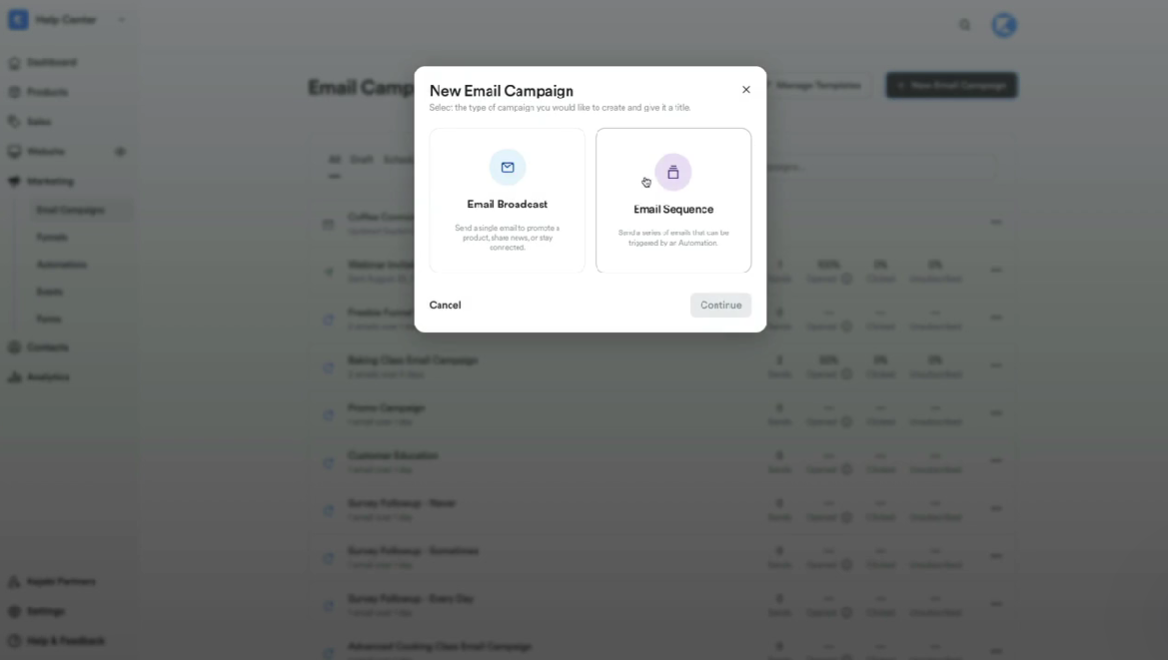
Unlike Circle’s Professional plan, Kajabi’s Basic tier includes email marketing, sales funnels, and advanced automations without add-on fees. The zero transaction fee policy means your revenue stays yours regardless of how much you earn. At $143/month (annual), the base price is higher than Circle’s $89 entry point, but the all-inclusive approach eliminates the add-on stacking that pushes Circle’s real cost higher. There’s no equivalent to Circle’s $99/month Email Hub or 2% transaction fee on top.
The trade-off: Kajabi limits you to 5 products and 2,500 contacts, while Circle offers unlimited members. For creators with small audiences selling multiple structured products, Kajabi provides better value. For community builders with large member counts and modest product catalogs, Circle’s unlimited members model may fit better.
|
Basic Plan | |
|---|---|
|
Pros |
Cons |
|
✅ Zero transaction fees |
❌ Higher base price (but includes email, funnels, and automations) |
|
✅ Email marketing included |
❌ Limited to 2,500 contacts |
|
✅ Advanced automations on every plan |
❌ Only 5 products |
|
✅ Native coaching product |
❌ 1 community only |
The Bottom Line 👉 Kajabi Basic costs more upfront but eliminates Circle’s transaction fees and add-on costs, making it more economical for creators generating real revenue from structured products.
Kajabi Growth Plan: $199/month (annual) or $249/month (monthly)
|
Feature |
Details |
|---|---|
|
Price |
$199/month (annual) or $249/month |
|
Products |
50 |
|
Contacts |
25,000 |
|
Transaction Fees |
0% |
|
Key Additions |
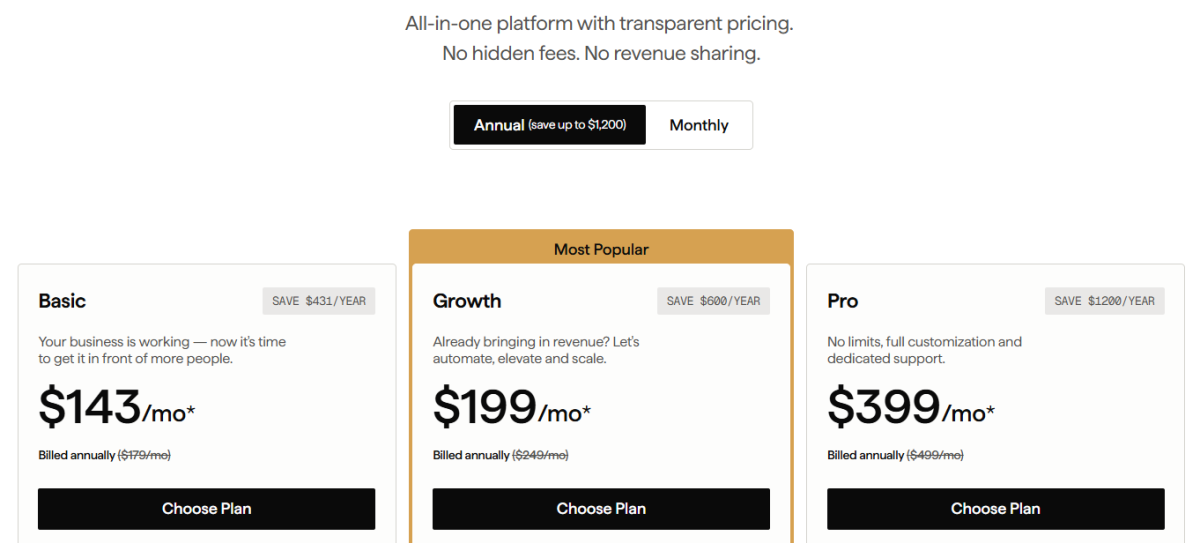
11 admin users, affiliate program, webhooks, 50 products |
The Growth plan matches Circle Business’s $199 price point (annual) while providing more capacity: 50 products, 25,000 contacts, and 11 admin users versus Circle’s 30-space limit and 1% transaction fee. The affiliate program enables partner-driven growth, and webhooks open third-party integrations.
At this tier, the pricing comparison becomes clear. A creator earning $15,000/month on Circle Business pays $199 + $150 (1% fee) + $99 (Email Hub) = $448/month. The same creator on Kajabi Growth pays $199/month with everything included.
|
Growth Plan | |
|---|---|
|
Pros |
Cons |
|
✅ 25,000 contacts with unlimited emails |
❌ Still limited to 1 community |
|
✅ 50 products for full curriculum |
❌ No branded mobile app |
|
✅ Affiliate program included |
❌ No API access |
|
✅ Zero transaction fees at any revenue |
❌ Annual billing required for best price |
The Bottom Line 👉 Growth provides the best value comparison against Circle Business: same price, zero fees, and more marketing and product capacity.
Kajabi Pro Plan: $399/month (annual) or $499/month (monthly)
|
Feature |
Details |
|---|---|
|
Price |
$399/month (annual) or $499/month |
|
Products |
Unlimited |
|
Contacts |
100,000 |
|
Transaction Fees |
0% |
|
Key Additions |
Branded mobile app, API access, 3 websites, 3 communities, 26 admin users |
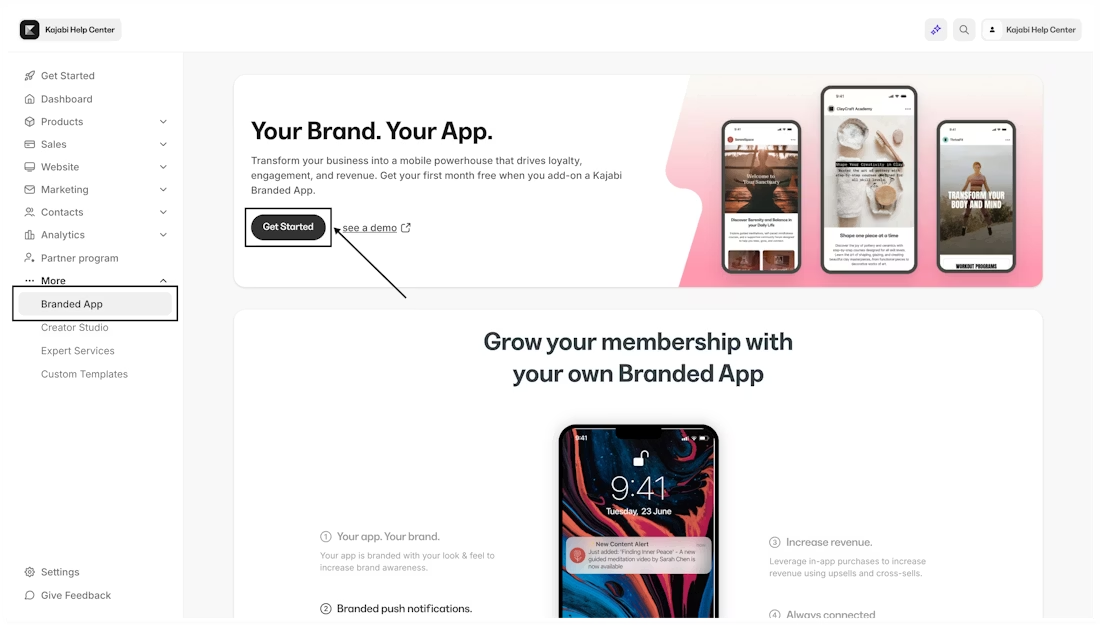
The Pro plan removes all limits: unlimited products, 100,000 contacts, 3 websites, and 3 communities. It includes a branded mobile app and full API access. At $399/month, the cost is real, but for an established business it replaces separate subscriptions for courses, email marketing, funnels, community, coaching, and a website builder. Unlimited scale with zero transaction fees creates long-term savings compared to Circle Plus’s custom pricing with ongoing 0.5% fees.
|
Pro Plan | |
|---|---|
|
Pros |
Cons |
|
✅ Unlimited products removes all ceilings |
❌ $399/month (replaces multiple tool subscriptions) |
|
✅ Branded mobile app included |
❌ Community features less deep than Circle |
|
✅ API access for custom development |
❌ Requires revenue to justify cost |
|
✅ 100,000 contacts for scale |
❌ Annual billing required for best price |
The Bottom Line 👉 Pro suits established knowledge businesses running multiple products, communities, and websites who want full capacity with predictable costs.
Justin Welsh moved his business to Kajabi and earned $10M+ on the platform, describing the shift as having “all that stuff under one roof, which was a blessing for my business.” (Kajabi Product Page)
⭐ If you’ve been thinking about starting your online business, this is your sign. Get 30 days of Kajabi free instead of the usual 14 days when you use this special link — no pressure, no rush, just more time to grow.
Circle Feature Value Breakdown (vs Kajabi)
Transaction Fee Impact Over Time
Circle’s Approach: Circle charges 2% (Professional), 1% (Business), or 0.5% (Plus) on every payment processed through the platform. These fees apply on top of Stripe’s standard processing charges. A community generating $10,000/month on the Professional plan pays $200/month ($2,400/year) in platform fees alone. Even at the lowest rate (0.5% on Plus), a $50,000/month operation pays $250 monthly in transaction fees.
Kajabi’s Approach: Kajabi charges zero transaction fees on all plans. Creators keep 100% of revenue minus only the payment processor’s standard card fees (2.9% + $0.30 through Kajabi Payments). Kajabi Payments also supports Apple Pay, Google Pay, Afterpay, and Klarna. A creator earning $10,000/month saves $100 to $200 compared to Circle’s fee structure.
🪙 Value Verdict: Kajabi is better for revenue-generating creators, with savings that compound as income grows. Circle’s fee structure works for early-stage communities with minimal revenue, but becomes increasingly expensive as the business scales.
Community Depth vs Business Breadth
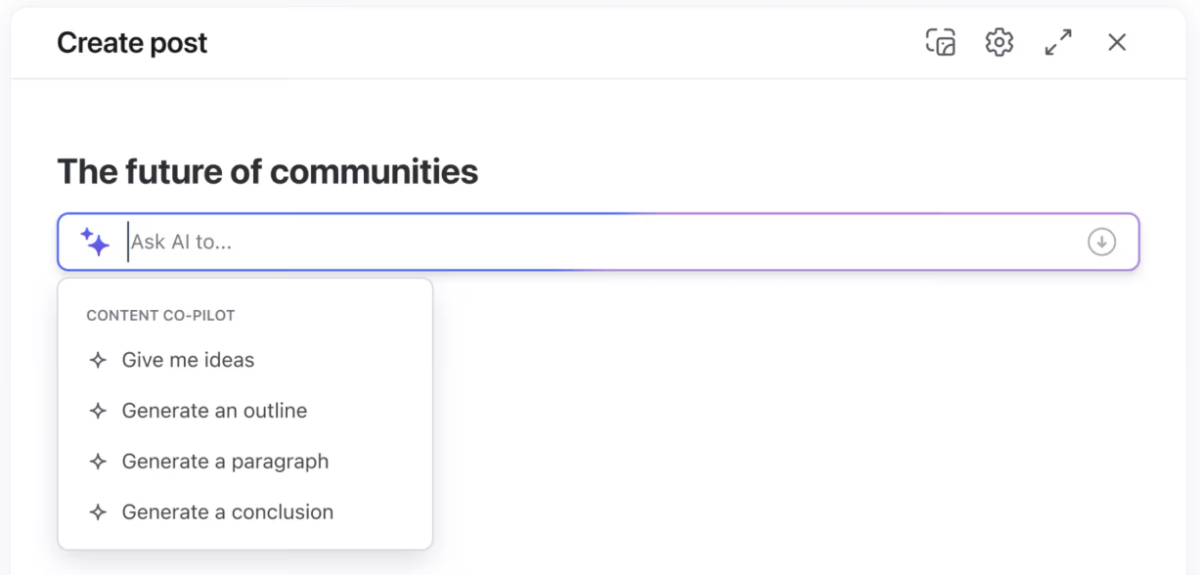
Circle’s Approach: Circle was built community-first and it shows. The platform offers Spaces architecture with Public/Private/Secret access levels, Space Groups for organization, threaded discussions, real-time chat, AI-generated post summaries, SEO-indexed public pages, and gamification with activity scores. The AI Agents feature (Circle Plus) provides always-on member support trained on community content. For pure community building, Circle’s toolset is deeper and more mature.
Source: Circle
Kajabi’s Approach: Kajabi’s Community product is functional with channels, access groups, Live Rooms, challenges, gamification, and direct messaging, but it was added to a course-first platform rather than being the foundation. Where Kajabi excels is breadth: the same account gives you courses, coaching with native scheduling, email sequences, sales funnels, and a complete checkout system. Community is one piece of a larger business infrastructure, and the consolidated analytics (seeing how email campaigns connect to course enrollments and community engagement) provide intelligence that’s difficult to replicate with separate tools.
🪙 Value Verdict: Circle is better for community-first businesses where member interaction is the primary value. Kajabi is better for businesses that deliver value through structured products (courses, coaching) with community as a supporting element.
Email Marketing and Automation
Circle’s Approach: Circle’s Email Hub is a paid add-on at $99/month for up to 10,000 contacts (free under 100). It offers broadcasts, automated workflows triggered by community actions, and dynamic segmentation based on member behavior. The advantage is tight integration with community activity: member posts, event RSVPs, and course completions can trigger email sequences automatically.
Kajabi’s Approach: Kajabi includes unlimited marketing emails on all plans with no add-on cost. The system supports broadcasts, sequences, A/B testing, behavioral automations, Liquid personalization, countdown timers, and custom sending domains. Advanced Automations with conditional branching are included on all current plans. Funnels (landing pages + email sequences + offers) are unlimited on every tier.
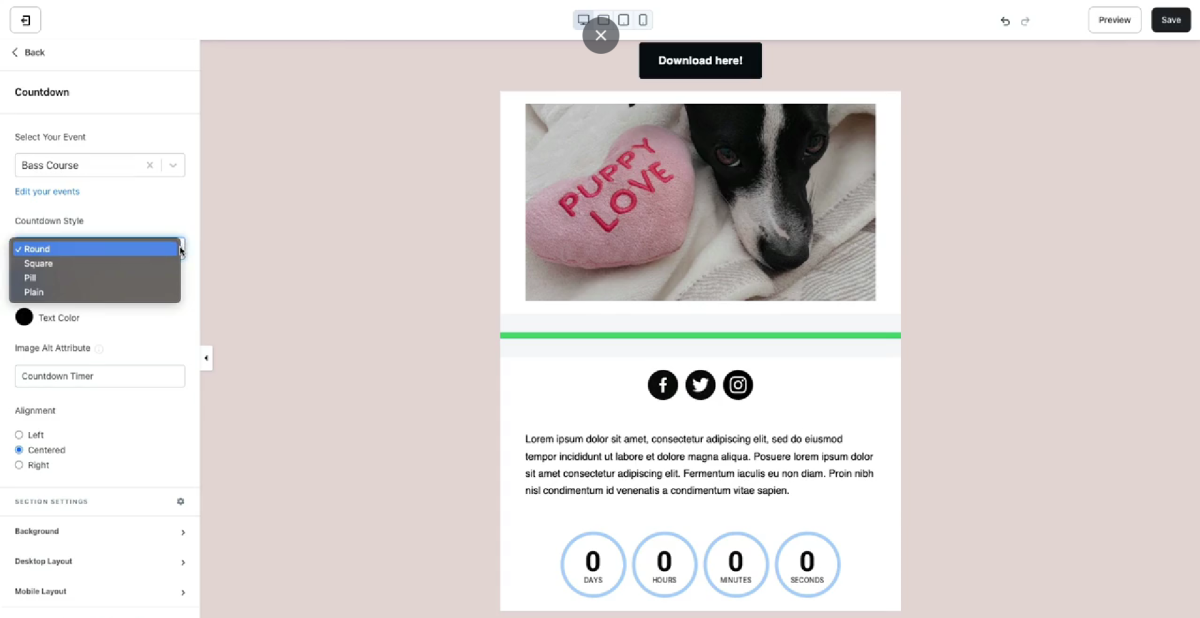
🪙 Value Verdict: Kajabi is better for creators who need email as a core business function from day one. Circle’s Email Hub is well-designed but costs extra, and only makes economic sense for operators already committed to Circle’s community infrastructure who want tighter behavioral triggers.
Course and Learning Tools
Circle’s Approach: Circle offers courses as a Space type with drag-and-drop builders, drip scheduling, quizzes (added June 2024), and cohort-based delivery. The community-native design means learners never leave the platform to discuss content or join live sessions. AI agents trained on course content provide always-on student support. Circle reports that cohort-based formats on their platform achieve higher completion rates than standalone courses.
Kajabi’s Approach: Kajabi offers six product types: Courses, Coaching, Communities, Podcasts, Newsletters, and Downloads. Courses include modules, submodules, quizzes, completion certificates, content locking, AI-generated outlines, and video transcription with dubbing in 70+ languages. The native coaching product adds scheduling, live video with breakout rooms, session recordings, and client notes. Kajabi’s AI tools include Creator Studio (which converts a single piece of long-form content into 40+ assets like emails, social posts, blog posts, and short videos) and an AI course creation assistant. Private podcasts and secured downloads round out the product suite.

🪙 Value Verdict: Circle is better for community-powered learning where peer interaction drives outcomes. Kajabi is better for structured educational programs with formal assessments, multiple product types, and native coaching delivery.
Final Verdict: Circle vs Kajabi
The choice between Circle and Kajabi depends on where the center of gravity lies in your business:
👍 Circle is a community-first platform for builders who want member interaction to be the primary experience. With unlimited members on all plans, space-level access controls, AI agents, and a modern discussion architecture, it enables creators to build branded communities where engagement drives retention. This approach works best for professional networks and peer groups where discussion is the product, creators with large free or low-cost communities monetizing through scale, operators who need AI-powered moderation and member support, and businesses where the community experience matters more than structured content delivery.
👉 Kajabi is an all-in-one platform for creator CEOs who monetize through structured courses, coaching programs, and memberships, with community as a supporting element. By offering zero transaction fees, native coaching tools, unlimited email marketing, and sales automation on every plan, it eliminates the add-on costs and revenue fees that increase monthly expenses on community-first platforms, consolidating what would otherwise require multiple subscriptions into a single platform. This makes it the stronger choice for coaches and consultants who need scheduling, live video, and client management built in, course creators selling structured educational programs with formal assessments, creators who generate significant revenue and want predictable costs without percentage-based fees, and businesses that need email marketing, funnels, and automation without paying extra.
Get a 30-day free trial with Kajabi here!
The fundamental difference is origin and priority. Circle asks “How can we build the best community experience and add business tools around it?” Kajabi asks “How can we give experts everything they need to run a knowledge business from one platform?”
Circle.so Pricing FAQ
Does Circle offer a free plan?
No. Circle offers a 14-day free trial with no credit card required, giving full access to evaluate the platform. After the trial, a paid plan starting at $89/month is required. There is also a 30-day money-back guarantee after upgrading, extending the risk-free evaluation window to 44 days.
How much does Circle actually cost per month?
The advertised price ($89 to $199/month) understates the true cost for most operators. Transaction fees (1 to 2%) and the Email Hub add-on ($99/month for 10,000 contacts) push real monthly costs higher. A Business plan community earning $10,000/month with email marketing pays approximately $398/month in total, not $199.
What are Circle’s transaction fees?
Circle charges 2% on the Professional plan, 1% on Business, and 0.5% on Circle Plus, applied to all revenue processed through the platform. These fees are in addition to Stripe’s standard card processing charges. For high-revenue communities, these fees become a significant line item that platforms like Kajabi eliminate entirely.
Is Circle or Kajabi cheaper?
It depends on revenue and needs. Circle’s $89 entry price is lower than Kajabi’s $143 (annual), but once you add transaction fees and the Email Hub, Circle often costs more in practice. A creator earning $5,000/month who needs email marketing pays approximately $288/month on Circle Professional versus $143/month on Kajabi Basic. For pure community building with minimal revenue, Circle’s lower base price wins.
Can I use Circle for courses?
Yes. Circle offers courses as a native Space type with drag-and-drop builders, drip scheduling, quizzes, and cohort-based delivery. The community-first design means course discussions happen naturally alongside content. However, Circle’s course tools are simpler than dedicated course platforms, lacking formal certificates at scale, graded assignments, and multiple product types like coaching and podcasts.
What’s included in Circle Plus?
Circle Plus is the enterprise tier with custom pricing. It adds AI Agents (up to 10 per community), custom SSO, a branded mobile app, highest platform limits, 10,000 Email Hub contacts included, a sandbox community, concierge onboarding, priority support, and a dedicated Customer Success Manager. The transaction fee drops to 0.5%.
Does Circle charge for email marketing?
Yes. Circle’s Email Hub is a paid add-on: free for under 100 contacts, then $99/month for up to 10,000 contacts. Circle Plus includes 10,000 contacts in its base price. This is an additional cost that platforms like Kajabi include at no extra charge on all plans with unlimited sends.
How does Circle’s space limit work?
The Professional plan allows 20 spaces and Business allows 30. Each space is a container for discussions, courses, events, or chat with its own access controls. Communities running multiple programs, cohorts, and tier levels can hit these limits faster than expected. Circle Plus offers the highest space limits but requires custom pricing.